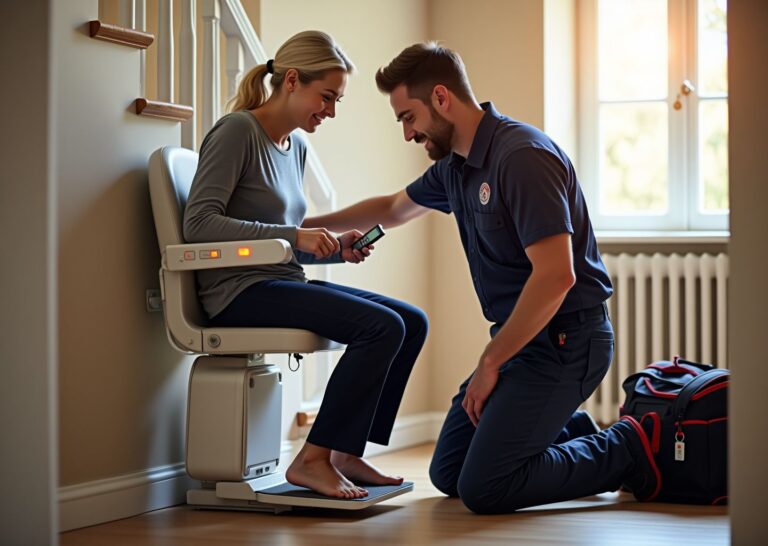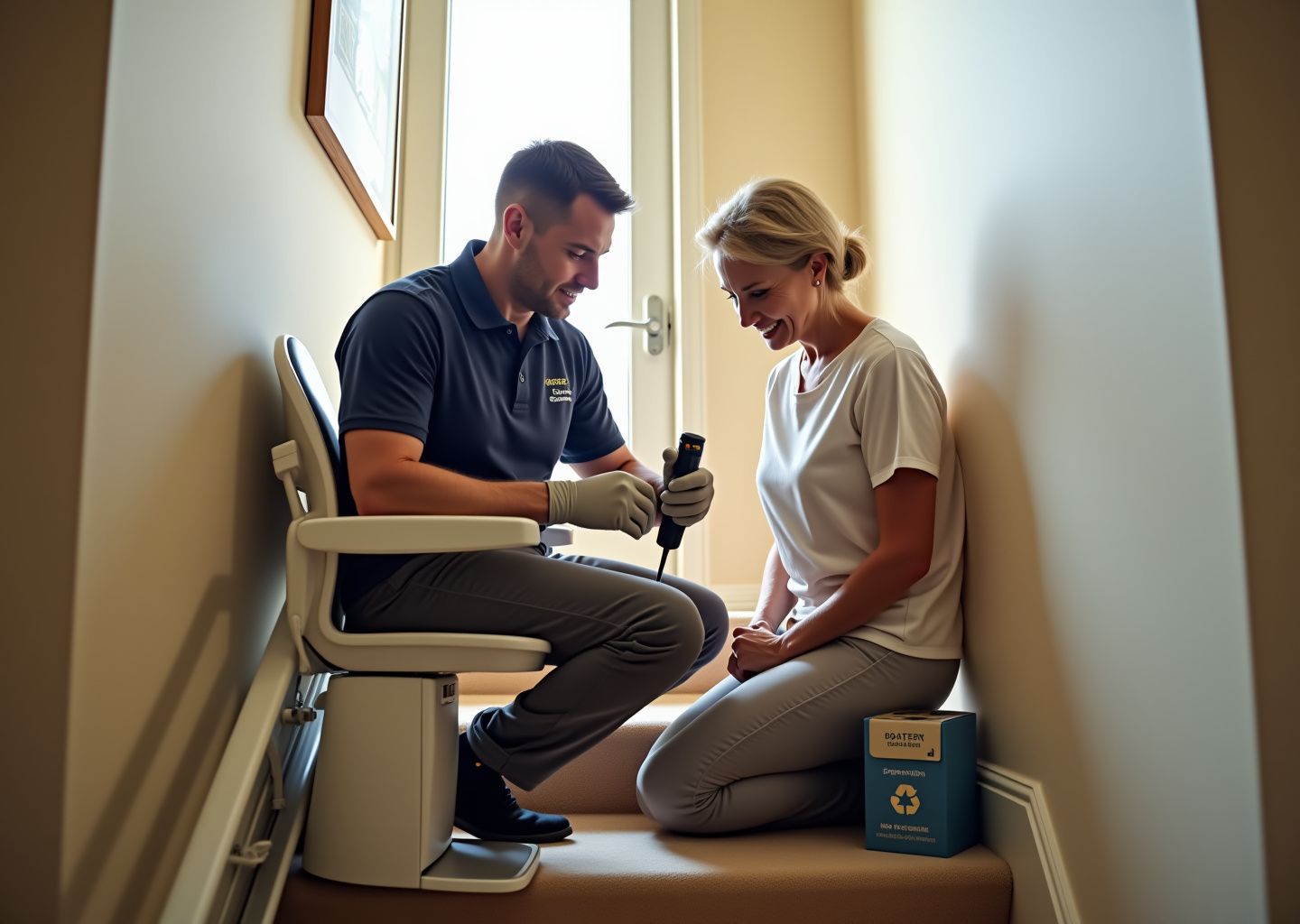
Batteries power every stairlift and determine reliability during daily use or emergencies. This guide explains the common battery chemistries, realistic replacement intervals, signs a pack needs changing, costs for parts and professional service, warranty and recycling rules, plus tips to extend life and choose between OEM and aftermarket options for safe dependable operation.
Why stairlift batteries matter and the types you will find
A stairlift is more than just a chair on a rail; it’s a critical piece of safety equipment. The batteries are its heart. They do much more than just move the chair up and down. During a power outage, the batteries ensure the stairlift continues to operate, preventing a user from being stranded midway. This feature, often called run continuity, is a fundamental safety requirement. They also power the emergency lowering function, allowing a safe descent if the main motor system has an issue. Beyond emergencies, batteries provide the smooth, consistent voltage needed for a secure ride without jerks or stutters, as a weak battery can cause unsteady movement that undermines user confidence and safety.
The most common battery type you’ll find in stairlifts across the USA, even in 2025, is the Sealed Lead Acid (SLA) battery. You might also see it called a Valve Regulated Lead Acid (VRLA) battery. Most stairlifts use a 24-volt system, typically created by wiring two 12-volt SLA batteries together in a pack. A popular variant is the Absorbed Glass Mat (AGM) battery, which is a type of SLA designed to be spill-proof and more resistant to vibration. For most standard straight or curved stairlifts, you will find batteries with a capacity between 7 and 12 amp-hours (Ah). For example, a pair of 12V 7Ah batteries is a very common configuration.
SLA technology is the industry standard for good reason. It’s a mature, reliable, and cost-effective solution. The initial cost is low, making the stairlift more affordable. However, it has drawbacks. SLA batteries are heavy, with a typical 12V 7Ah unit weighing around 4 to 6 pounds. They have a lower energy density, meaning they store less power for their size compared to newer technologies. Their lifespan is also limited, typically lasting 2 to 5 years. They are quite sensitive to temperature; performance can drop significantly in the cold, and high heat drastically shortens their life. They also have a shorter shelf life, losing charge over a few months if left idle. Their charging process is simple but can be slow, and overcharging can damage the battery and cause it to vent hydrogen gas, a minor but notable safety concern.
In recent years, especially in newer and higher-end models, lithium-ion battery packs are becoming more common. Lithium technology offers significant advantages. It has a much higher energy density, so a lithium battery can be smaller and lighter while providing the same or better performance. A lithium pack can be less than half the weight of an equivalent SLA pack. This is a huge benefit for technicians during installation and service. They also boast a much longer lifespan, often rated for 3 to 7 years or more, and can handle thousands of charge cycles compared to the few hundred for SLA. They perform better in a wider range of temperatures and have a very long shelf life, losing very little charge when not in use. The main downsides are a significantly higher initial cost and the requirement for a sophisticated Battery Management System (BMS). This electronic circuit is essential for safety, preventing overcharging, over-discharging, and thermal runaway, a rare but serious risk with lithium chemistry.
Major stairlift brands approach battery technology with different strategies. Brands like Acorn, Bruno, and Stannah have long relied on proven 12V SLA batteries (often 7Ah or 8Ah) as the standard for most of their models. This keeps the purchase price down and uses a technology that service technicians everywhere are familiar with. Manufacturers choose SLA for its predictable performance and low cost. In contrast, brands like Handicare have started offering lithium-ion packs as an optional upgrade or as a standard feature on their premium curved models. The choice for lithium is driven by a desire to offer longer service intervals, lighter components, and superior performance, appealing to customers who prioritize long-term value over initial cost.
Identifying your stairlift’s battery type is usually straightforward. Here is a quick checklist to help you figure out what you have.
- Visual Cues
SLA batteries are almost always black, rectangular plastic boxes. They often have markings like “12V,” “7Ah,” and “SLA” or “AGM” printed on a top or side label. - Owner’s Manual
This is the most reliable source. The technical specifications section will list the exact battery type, voltage, and amp-hour rating required for your model. - Charger Label
The power adapter or charging unit for your stairlift may have a label indicating the type of battery it is designed for, such as “For use with SLA batteries only.” - Battery Markings
If you can safely see the batteries themselves, the information is printed directly on them. You will see the voltage (V) and amp-hour (Ah) capacity clearly marked.
Always consult your owner’s manual for the exact specifications before purchasing replacements. Using the wrong battery chemistry or size can damage your stairlift’s charging system and void your warranty.
When to replace stairlift batteries and how to diagnose problems
Knowing when your stairlift batteries are on their way out is key to avoiding an unexpected breakdown. Unlike a light bulb that burns out instantly, a stairlift battery usually gives you plenty of warning signs that it’s losing its ability to hold a strong charge. Paying attention to these clues can help you plan for a replacement before you’re left stranded.
The most common sign of a failing battery is a noticeable change in performance. Your stairlift might start moving more slowly up the stairs, especially if it’s carrying a full load. This happens because the aging battery can no longer deliver the steady voltage the motor needs. You may also experience intermittent stops. The lift might pause for a second mid-travel and then continue, or it might stop completely and show a stall warning on its display. Another classic symptom is the lift failing to reach its charging point at the top or bottom of the stairs. It might stop just short, unable to make that final push to park and recharge properly.
Your stairlift is designed to communicate with you. Listen for new or frequent beeping sounds, as many models use audible alerts to signal low battery voltage. Similarly, check the diagnostic lights on the unit or the charger itself. A charger that normally shows a solid green light when the battery is full might now be flashing red or amber, indicating a fault or an inability to charge the battery pack. The most direct indicator is a reduced runtime. If your lift used to handle a dozen trips during a power outage but now struggles to complete two or three, the batteries have lost significant capacity. In severe cases, you might even see physical signs of failure. Look for any swelling, bulging, or cracking in the battery case, or any signs of acid leakage, which often looks like a white, crusty powder around the terminals. If you see this, stop using the lift immediately and call a technician.
Under normal household use in 2025, you can expect a typical set of Sealed Lead Acid (SLA) batteries to last between 2 and 5 years. Where your lift falls in that range depends heavily on usage and environment. A stairlift used ten or more times daily will wear out its batteries much faster than one used twice a day. Extreme temperatures also play a huge role. Cold weather can temporarily reduce a battery’s capacity, while consistent heat above 77°F can permanently shorten its lifespan. For seasonal homes where a stairlift sits idle for months, the batteries can degrade from sitting in a discharged state. In these situations, a battery maintainer (or trickle charger) is an excellent investment to keep the battery at an optimal charge level, preventing damage from deep discharge and extending its overall life. Newer lithium battery options generally offer a longer lifespan, typically lasting 3 to 7 years or more, but their longevity is tied to the number of charge cycles and the quality of their built-in Battery Management System (BMS).
If you’re comfortable with basic tools, there are a few simple tests you can perform. First and foremost, ensure the stairlift is completely powered off at the main switch and unplugged from the wall outlet before you inspect anything. Safety is non-negotiable. Once it’s safe, you can check the charger’s LED behavior. Plug it back in and observe the light. Does it indicate a fault, or does it show it’s charging correctly? For a more technical check, a simple multimeter can tell you the resting voltage. A healthy, fully charged 12-volt SLA battery should read between 12.6 and 12.8 volts. A reading below 12.4 volts suggests it’s losing capacity, and anything below 12 volts indicates it’s near the end of its life. You can also perform a simple runtime test. After ensuring the battery is fully charged, run the stairlift up and down the stairs five consecutive times. If you notice a significant drop in speed by the last trip, the batteries are likely weak.
However, these home tests are just indicators. The most definitive diagnosis comes from a professional load test. A technician has a specialized tool that measures how the battery performs under a simulated load, which accurately reveals its true health. If you are ever unsure or uncomfortable working with electrical components, calling a certified technician is always the safest and most reliable option. They can confirm the battery is the problem and ensure the correct replacement is installed safely. You can find a wide variety of replacement batteries at specialized retailers like BatteryClerk.com, but professional confirmation of the issue is a wise first step.
How much battery replacement costs and how to save money
Once you’ve determined that your stairlift needs new batteries, the next logical question is about the cost. Understanding the full price of a replacement helps you budget properly and avoid surprises. The final bill is more than just the price of the batteries; it includes several components that can vary significantly.
Breaking Down the Total Cost of Replacement
The total cost for a stairlift battery replacement in 2025 typically breaks down into four main parts. Each part contributes to the final invoice from a professional service provider.
- Battery Pack (Parts Cost)
This is the core expense. For common Sealed Lead Acid (SLA) battery packs, the cost for the parts alone can range from $40 to $120 for a pair of aftermarket batteries. If you purchase Original Equipment Manufacturer (OEM) branded packs through a dealer, the cost is typically higher, ranging from $100 to $300. Premium lithium-ion upgrades are at the top of the range, often costing $250 to $650 or more. - Labor or Service Call Fee
A professional technician’s time is a key part of the cost. This fee covers the labor for safely removing the old batteries, installing the new ones, testing the system, and ensuring the charger is working correctly. In 2025, this fee commonly adds $75 to $350 to the total. - Travel Charges
If you live far from the service provider’s office, they may add a travel charge. This fee covers the technician’s fuel and time to get to your home. It can range from a nominal amount to over $100, depending on the distance. - Diagnostic Fees
In some cases, if the problem isn’t clearly the battery, a dealer might charge a separate diagnostic fee to troubleshoot the stairlift first. This is often waived if you proceed with the recommended repair, such as a battery replacement.
OEM vs. Aftermarket Batteries Which is the Better Value?
You have a choice between batteries from your stairlift’s original manufacturer (OEM) and third-party or aftermarket batteries. Each has its pros and cons.
- Cost
Aftermarket batteries are almost always cheaper upfront. You can often find a compatible SLA battery pack online for 50-70% less than an OEM equivalent. - Warranty
OEM batteries typically come with a better warranty, often lasting 12 to 24 months. Aftermarket battery warranties are usually shorter, around 6 to 12 months. - Compatibility and Longevity
OEM batteries are guaranteed to be a perfect match for your stairlift’s charging system, ensuring optimal performance and lifespan. While many aftermarket batteries work well, there is a small risk of a mismatch that could shorten the battery’s life or even damage the charger. OEM batteries are generally expected to last slightly longer. - Cost-Per-Year
An OEM battery costing $250 that lasts four years has a cost of $62.50 per year. A cheaper $120 aftermarket battery that lasts two and a half years costs $48 per year. The aftermarket option is cheaper annually, but it requires more frequent replacement and carries a higher risk of compatibility issues.
DIY Replacement Savings and Risks
Replacing the batteries yourself is the cheapest option, potentially saving you over $200 in labor and fees. You would only pay for the cost of the batteries, like a two-pack from a home improvement store. However, this path comes with significant risks. First, performing the replacement yourself will likely void your stairlift’s warranty. Second, ordering the wrong type of battery (incorrect chemistry, size, or terminal type) could damage your stairlift’s sensitive electronics. Finally, there are safety risks involved with handling batteries and electrical components if you are not experienced.
Smart Ways to Save Money on Battery Replacement
If DIY feels too risky, there are still several ways to manage the cost of a professional replacement.
- Look for Promotions
Ask your authorized dealer about seasonal service promotions or discounts on battery replacements, often available in the fall or spring. - Enroll in a Service Plan
Many dealers offer annual service plans that include preventative maintenance and may cover the full or partial cost of battery replacement. Over time, this can be more cost-effective than paying for individual service calls. - Consider a Lithium Upgrade
If you use your stairlift heavily, a lithium battery upgrade might be a smart investment. While the upfront cost is higher, lithium batteries can last up to twice as long as SLA batteries, saving you money on future replacements. Calculate the return on investment (ROI) with your dealer. - Recycle for Credit
When you replace your old batteries, don’t just throw them away. Most states require lead-acid batteries to be recycled. Many local battery recyclers or auto parts stores offer small trade-in credits for old batteries.
Financing Options for Stairlift Maintenance
A sudden battery failure can be an unexpected expense. Fortunately, several financing options are available in the US to help manage the cost.
- Dealer Payment Plans
Many local stairlift dealers offer in-house payment plans that allow you to spread the cost of the repair over several months. - Medical Equipment Financing
Companies like CareCredit offer financing specifically for health and medical expenses, which can include stairlift repairs and battery replacements. - VA Programs
Eligible veterans may be able to get assistance through VA programs like Home Improvements and Structural Alterations (HISA) grants, which can cover costs related to home mobility equipment.
Decision Checklist Your Best Replacement Route
To choose the right path for you, consider these three factors.
- Cost
If the lowest possible upfront price is your main priority, a DIY replacement with carefully selected aftermarket batteries is the cheapest route. Just be fully aware of the risks. - Warranty and Peace of Mind
If you want the security of a full warranty and guaranteed compatibility, a professional installation using OEM batteries is the best choice. This is the safest and most reliable option. - Long-Term Value
If you plan to use the stairlift for many years and want to minimize future service calls, investing in a professional installation of a high-quality OEM or lithium battery pack offers the best long-term value.
Frequently Asked Questions common concerns answered
Here are direct answers to some of the most common questions we hear from homeowners regarding stairlift batteries.
-
My stairlift is slow, but the charger light is green. What’s wrong?
This is one of the most common signs of a failing battery. A green light on the charger indicates that the charger itself is working and has completed its charging cycle. It does not, however, guarantee the battery can hold that charge. An old battery loses its capacity to store energy, much like an old cell phone that dies quickly even after being charged all night. If your lift is slow despite a green light, the battery is almost certainly the culprit and needs professional testing and likely replacement. -
Are lithium batteries compatible with my older stairlift?
Not directly. You cannot simply swap an SLA battery for a lithium one. Lithium batteries require a different charging voltage and a specific Battery Management System (BMS) to operate safely. However, as of 2025, some manufacturers and third-party companies offer conversion kits for popular older models. These kits include the lithium battery pack, a new compatible charger, and any necessary adapters. Always consult with an authorized dealer to see if a certified upgrade is available for your specific model. -
How do I dispose of my old stairlift batteries safely?
Stairlift batteries are typically sealed lead-acid and are considered hazardous waste. You cannot throw them in your regular trash. In the United States, federal and state laws mandate they be recycled. The easiest way to handle disposal is to give the old batteries to the technician who installs your new ones; they are required to recycle them properly. Alternatively, you can take them to any retailer that sells lead-acid batteries, such as an auto parts store or a battery specialty shop, as most are required by law to accept them for recycling at no charge. -
Does Medicare or insurance cover stairlift batteries?
Unfortunately, no. As of late 2025, Medicare does not classify stairlifts or their components, including batteries, as durable medical equipment (DME). Therefore, it does not cover the cost of replacement. Some private insurance plans or Medicare Advantage plans may offer partial reimbursement under a home safety or modification benefit, but this is uncommon. You should always check with your specific plan administrator, but expect to pay out-of-pocket. -
What are the signs of an emergency battery failure, and what should I do?
An emergency failure means the lift stops completely, often mid-stairway, and will not move in either direction. You may hear a continuous beeping alarm. If this happens, do not attempt to fix it yourself. Your immediate step is to call your stairlift service provider for an emergency service call. If the user is on the lift, consult your owner’s manual for instructions on using the manual lowering feature (like a hand-crank or lever) if it is safe to do so.
Conclusion final recommendations and next steps
Navigating the world of stairlift batteries doesn’t have to be complicated. We’ve covered the technical details, from battery types to the signs of failure. Now, let’s bring it all together into a clear plan. The key takeaway is that your stairlift’s battery is a consumable component with a finite lifespan. Proactive management is the difference between seamless reliability and an unexpected, stressful situation. Your stairlift’s performance depends on a healthy power source, and understanding when and how to act is crucial for maintaining safety and independence at home.
The first step is to know what you’re working with. Most stairlifts have a removable panel on the carriage (the seat unit) that houses the batteries. Before opening anything, turn off the main power switch for the stairlift. Inside, you will typically find two black, rectangular batteries. Look for a label on the top or side; it will usually state the voltage and amp-hour rating, such as 12V 7Ah or 12V 8Ah. The most common type is a Sealed Lead Acid (SLA) battery. If you’re unsure, your user manual will specify the exact type required. With this information, you can set realistic expectations. A standard SLA battery in a typical US household will last between two and five years. If the stairlift is used more than ten times a day or is in a very warm or cold part of the home, expect to be closer to the two-year mark.
When it’s time for a replacement, you have a few choices, each with different cost implications. A professional replacement from an authorized dealer is the safest and most convenient option, typically costing between $150 and $550, including the service call, labor, and parts. For those with an older, out-of-warranty lift, using a high-quality aftermarket battery can offer significant savings. You can find compatible SLA batteries online for as little as $40 to $100 for a pair. This path requires some technical confidence but can cut costs by over 50%. A lithium battery upgrade is the most expensive upfront choice, with a total installed cost often between $400 and $750, but makes sense for heavy users or those wanting the longest possible lifespan, as they can last over seven years. Choose an OEM battery if your lift is still under warranty. Opt for aftermarket if you’re comfortable with basic tool usage on an older machine. Consider a lithium upgrade only if your model is confirmed to be compatible and you plan to use the lift for many more years.
To simplify your maintenance routine, here is a prioritized checklist to ensure your stairlift remains dependable.
-
Monitor Runtime Monthly
Once a month, test how many full trips up and down the stairs the lift can make on battery power alone. A healthy system should manage at least 10 to 15 trips. If you notice this number decreasing or the speed slowing down, it’s an early warning sign. -
Keep the Charger Connected
Your stairlift is designed to be parked at its charging station at all times when not in use. The charger maintains the batteries at an optimal level. Never unplug it unless instructed by a technician. -
Schedule Professional Testing at the First Sign of Trouble
Don’t wait for a complete failure. If the lift starts beeping unexpectedly, moves slower than usual, or hesitates, call a service technician. They can perform a load test to accurately diagnose the batteries’ health. -
Compare Quotes from at Least Two Authorized Dealers
When it’s time for a professional replacement, get quotes from two or more local dealers. Prices for the exact same service can vary, and comparing options can save you a significant amount. -
Recycle Old Batteries Responsibly
Used stairlift batteries are considered hazardous waste. They must not be thrown in the trash. Your service technician will handle disposal, or you can take them to any local auto parts store or recycling center that accepts lead-acid batteries, often for free.
Always prioritize safety. Before you even open the battery compartment for a visual inspection, make sure the main power to the unit is switched off. If you feel any hesitation about handling the components, the safest decision is always to call a professional.
Finally, think of battery replacement as a predictable part of your home’s upkeep, much like changing the filters in your HVAC system. Budgeting for this cost every few years prevents it from becoming a financial surprise. Many dealers offer annual service plans that include battery testing and may even bundle the cost of a future replacement. Investing in a service plan can provide peace of mind, ensuring your stairlift remains a safe and reliable solution for navigating your home for years to come.
References
- Stair Lift Batteries – AmeriGlide
- Stair Lift Replacement Battery 12v-7AH (Single) – AmeriGlide Lexington
- Stairlift Replacement Batteries – BatteryClerk.com
- Stairlift Batteries for Different Models and Brands – Walmart
- 12-Volt 7Ah Battery Replacement for Acorn Stairlift (2-Pack) – The Home Depot
- Brooks Straight Stairlift Replacement Battery – BatterySharks.com
- Stairlift Replacement Batteries – UPS Battery Center
Legal Disclaimers & Brand Notices
The information contained in this article is for informational and educational purposes only. It is not intended to be a substitute for professional technical advice, diagnosis, or service from a certified stairlift technician or electrician. Always consult your equipment’s owner’s manual and a qualified professional before attempting any maintenance, repair, or battery replacement, especially concerning electrical components.
All product names, logos, and brands mentioned, including but not limited to Acorn, Bruno, Stannah, Handicare, and Mighty Max, are trademarks or registered trademarks of their respective owners. Use of these names does not imply any affiliation with or endorsement by the trademark holders.