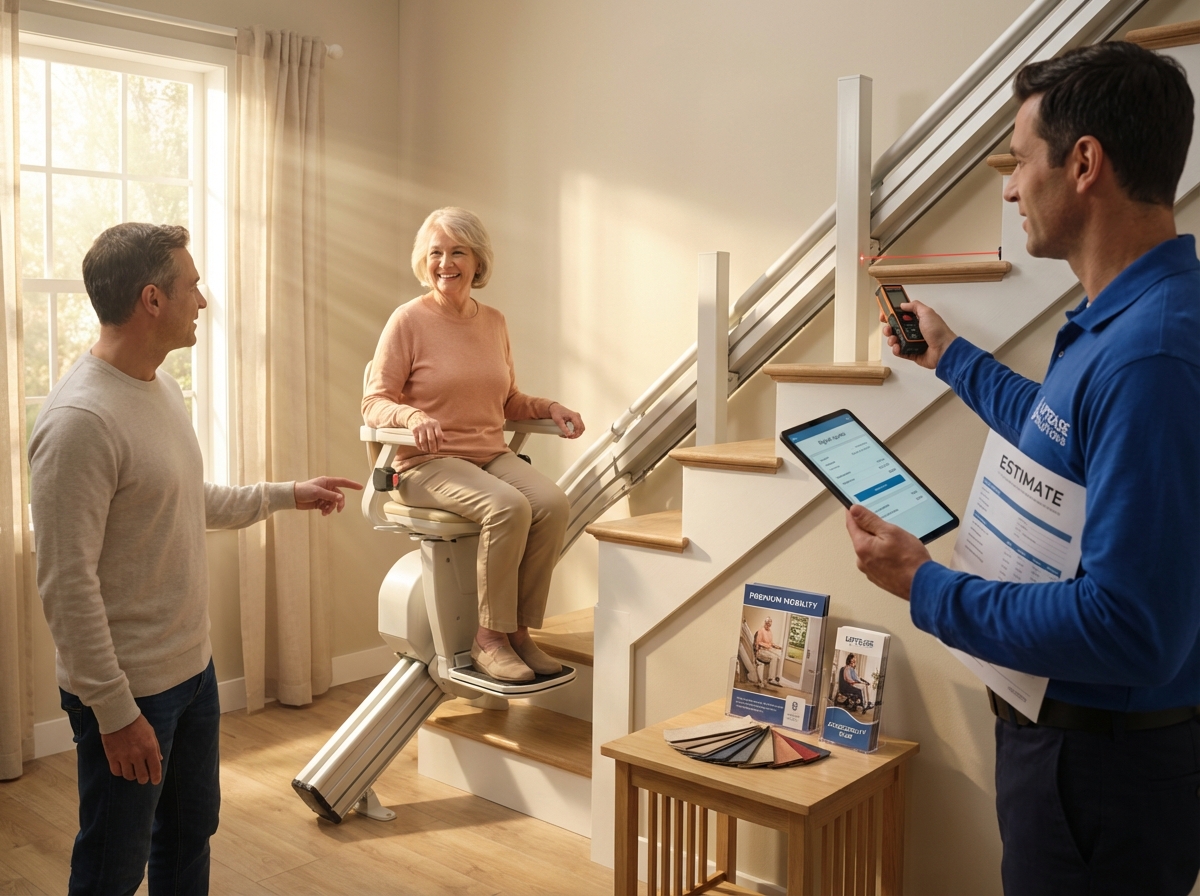
Planning a stairlift in 2025 means balancing safety, budget and installation realities. This guide dives into typical price ranges, the difference between straight and curved systems, common hidden fees, installation steps, financing options and safety upgrades. Use these insights to compare brands, get accurate quotes and avoid surprises when making your home safer and more accessible.
Why a stairlift may be the right choice for your home
Stairs often turn from a simple part of a house into a major obstacle as we age. Many people in the United States want to stay in their current homes for as long as possible. This trend is known as aging in place. Data from the 2020 Census and AARP shows that most seniors prefer this over moving to assisted living facilities. But multi-level homes present a real danger when mobility starts to fade. The CDC reports that falls are the leading cause of injury related emergency room visits for older adults. A single slip on a staircase can change a person’s life in seconds. This makes the decision to modify a home a matter of safety rather than just comfort.
When mobility becomes an issue, homeowners usually look at a few different paths. One is moving to a single-story home. This sounds simple but the costs are high. You have to think about real estate commissions. You have to pay moving fees. There is also the stress of leaving a familiar neighborhood. In 2025, these transaction costs often exceed the price of a high-end stairlift. Another path is a major home renovation. This might involve building a bedroom on the first floor. It could mean installing a ramp. Ramps can cost anywhere from $1,000 to $50,000 depending on the length and materials. They take up a lot of space in a yard or entryway. They are not always a viable option for every property layout.
The Elevator Alternative
Residential elevators are a luxury option for home mobility. They provide a smooth ride between floors. The price tag is very steep. A typical home elevator in 2025 ranges from $20,000 to over $100,000. You also have to deal with significant construction. This includes building a shaft. It requires modifying the home’s structure. A stairlift is often the most practical middle ground. It restores access to the whole house without the need for a massive construction crew. It is a much faster solution for families who need help immediately.
Structural Considerations
Stairlifts are especially useful for narrow staircases where an elevator or a ramp just won’t fit. Most residential units only require about 30 to 34 inches of width. The installation is clean because the rail mounts to the stair treads. It does not attach to the wall. This means you don’t have to worry about structural changes. You won’t have to deal with messy drywall repairs. This makes them ideal for older homes with historic details that you want to preserve. The footprint is minimal. Most seats and footrests fold up when they are not in use. This leaves plenty of room for other family members to walk up the stairs normally.
User Profiles and Needs
Different people choose stairlifts for different reasons. Active seniors might use them to save energy for other activities. They can still walk but they want to avoid the strain of climbing stairs multiple times a day. This helps them stay active in other ways. Then there are people recovering from surgery. Hip or knee replacements often result in temporary mobility loss for four to eight weeks. A short term rental is a common solution here. It provides safety during the recovery period without a permanent commitment. You can find more details on these options in this guide on How Much Does a Stair Lift Cost in 2025? – Lifeway Mobility. Caregivers also benefit from these systems. Assisting someone up the stairs is physically demanding. It puts the caregiver at risk of back injuries. A stairlift automates this process. It gives the caregiver peace of mind. It allows the resident to move between floors independently.
Measurable Benefits
The benefits go beyond just safety. There is a huge psychological boost that comes with independence. Being able to reach your own bedroom or a basement hobby room matters for mental health. From a financial perspective, a stairlift is a solid investment in home safety planning. While it might not increase the resale value for every buyer, it makes the home accessible to a wider market of seniors. If a seller needs to remove it, the process is straightforward. A professional can usually take it out in a few hours. The small holes in the stair treads are easy to fill or cover with a new runner. Modern units come with obstruction sensors. These stop the chair if a pet or an object is on the steps. Battery backup systems are now standard. This ensures the lift works even during a power outage. Swivel seats make getting on and off the chair much safer at the top landing. These features work together to reduce the risk of a fall. Choosing a stairlift is about balancing cost and function. It is often the fastest way to make a home safe. A straight lift can be installed in just a few weeks. This speed is vital when someone is coming home from the hospital. It provides a reliable way to navigate the home while keeping the original layout intact.
Types of stairlifts and realistic 2025 price ranges
Understanding the financial landscape of home mobility starts with a clear look at the hardware. In 2025, the market offers several distinct lift types designed for specific architectural needs and user requirements. Choosing the right model involves balancing the physical layout of your stairs with your long term budget. While a basic unit might seem like the obvious choice, the complexity of your home often dictates the final invoice.
Straight Rail Stairlifts
These are the most common and affordable options found in American homes. They are designed for a single flight of stairs that travels in a perfectly straight line without any turns, curves, or intermediate landings. Because the rails are mass produced in standard lengths, the base price is relatively low. In 2025, a standard straight lift typically starts with a base price of $2,500. However, the average installed price range usually falls between $3,000 and $7,000. Factors that push the cost toward the higher end include increased motor power for higher weight capacities, which can add $500 to $2,000. Luxury upholstery or custom seat colors can add another $150 to $800. These units are often kept in stock by local dealers, leading to short lead times of just one to two weeks from the initial order to the final installation.
Curved Stairlifts
If your staircase has a turn, a landing, or a spiral design, a curved rail system is necessary. These lifts are significantly more expensive because the rail must be custom fabricated to match the exact geometry of your home. The base price for a curved unit in 2025 starts around $9,000, but most homeowners spend between $10,000 and $25,000 for a complete setup. The complexity of the railwork is the primary cost driver. Every additional bend or elbow can add $500 to $3,000 to the total. If your stairs have multiple landings or a switchback design, the price climbs quickly. Because each rail is a one of a kind piece of engineering, lead times are much longer, typically ranging from 6 to 12 weeks. In some complex cases, manufacturing can take up to 16 weeks.
Outdoor Models
Outdoor lifts are built to withstand rain, snow, and extreme temperature fluctuations. They use weatherproof materials, stainless steel hardware, and specialized covers to protect the electronics. Because of these upgrades, outdoor models carry a premium of $1,000 to $4,000 over their indoor counterparts. A straight outdoor lift often starts at $8,000 installed. If you need a curved outdoor lift, the price can easily exceed $20,000. Site preparation for these units often requires additional electrical work to ensure a safe, grounded power source, which might add $300 to $1,500 to the project cost.
Standing and Perch Lifts
For users who have difficulty sitting or have very narrow staircases, standing lifts or perch lifts provide a niche solution. These units feature a small platform and a shallow seat that allows the user to remain in a semi standing position. They are generally priced similarly to lower end straight lifts, with installed costs ranging from $3,000 to $6,000. While they save space, they are limited by user balance and weight capacity. They are often chosen for homes where the stair width is less than 30 inches, making a traditional seated lift impractical.
Wheelchair Platform Lifts
Also known as Vertical Platform Lifts or VPLs, these are essentially mini elevators for wheelchair users. They are frequently installed on porches or next to short flights of stairs. In 2025, a residential VPL typically costs between $5,000 and $20,000 installed. The price depends on the lifting height and whether a concrete pad or structural foundation is required. Foundation work alone can add $500 to $5,000 to the total. These units are essential for full wheelchair independence but require more space and permitting than a standard chairlift.
| Lift Type | Typical Base Price | Average Installed Range (2025) |
|---|---|---|
| Straight Rail | $2,500 | $3,000 to $7,000 |
| Curved Rail | $9,000 | $10,000 to $25,000 |
| Outdoor Model | $4,500 | $8,000 to $12,000 |
| Standing/Perch | $2,800 | $3,000 to $6,000 |
| Platform (VPL) | $5,000 | $5,000 to $20,000 |
Used and Refurbished Options
Buying a pre owned lift is a viable way to save money, especially for straight staircases. Certified refurbished straight lifts in 2025 commonly sell for $2,000 to $4,500 installed. This represents a savings of 30% to 60% compared to new models. Most reputable dealers provide a limited warranty of 90 days to 12 months on these units. However, used curved lifts are rare. Since the rails are custom made for a specific house, they almost never fit a different staircase without expensive re fabrication. If you find a used curved motor, you will still likely need to pay for a new custom rail, which negates much of the savings.
Why Curved Lifts Cost More
The price gap between straight and curved systems often surprises homeowners. Straight rails are made of aluminum and cut to length on site. Curved rails are usually made of heavy duty steel and require precise 3D measurements of your stairs. A factory then uses specialized machinery to bend the steel to those exact specifications. This custom engineering ensures the chair remains level throughout the turns. In addition to the rail itself, the installation labor for a curved lift is much higher. A straight lift takes 2 to 4 hours to install, while a curved system often requires 4 to 8 hours of on site work plus final rail trimming and testing. According to Lifeway Mobility, the staircase configuration remains the most significant factor in these wide price variations.
Additional Cost Drivers
Beyond the rail type, specific features can push your total higher. A powered swivel seat, which automatically turns the chair at the top landing for a safer exit, adds $400 to $1,200. A powered folding hinge at the bottom of the rail is useful if a doorway is blocked, but it adds $250 to $700. If your home requires a dedicated electrical outlet near the stairs, an electrician may charge $150 to $600 for the installation. These small upgrades improve safety and convenience but should be planned for in the initial budget to avoid surprises during the final site survey.
What to expect during site survey and installation
The Site Survey Process
The site survey is the most critical step in planning your home modification. A professional technician visits your home to evaluate the physical environment. They do not just look at the stairs. They examine the entire path of travel. The technician starts by measuring the stair geometry. This includes the total rise from the bottom floor to the top landing. They count every step and measure the depth of the treads. Most straight stairlifts require a minimum width of 28 to 34 inches to operate safely. If your stairs are narrower than 24 inches, many installers in 2025 will refuse the job for safety reasons.
Headroom is another major factor. The surveyor measures the distance from the stairs to the ceiling at the lowest point. If you are tall or the ceiling is low, your head might hit the bulkhead while you are seated. The technician also looks at the floor types. They need to know if they are drilling into hardwood, concrete, or carpeted plywood. Most rails attach directly to the stair treads rather than the wall. This reduces the need for structural wall reinforcements. However, the technician must confirm the stairs can handle the weight of the unit plus the user. They look for any signs of wood rot or structural instability in the staircase itself.
Doorways at the top and bottom of the stairs present unique challenges. If a door swings toward the stairs, the rail might block it. The surveyor checks for these obstructions. They also look for handrails that might need to be removed. In many cases, the existing handrail stays on one side while the lift rail sits on the other. Electrical access is the final piece of the survey. Most modern lifts use rechargeable batteries. These batteries need a standard 110V outlet nearby to stay charged. The technician identifies the closest outlet or determines if a new one is necessary.
Installation Day Preparation
Homeowners should prepare the area before the installers arrive. Clear all items from the staircase. Remove wall decorations, picture frames, or plants that might be bumped during the process. It is helpful to move furniture away from the top and bottom landings to give the technicians room to work. If you have pets, keep them in a separate room. The noise of power tools can be stressful for animals.
The time required for installation varies by the type of system. A standard straight stairlift usually takes two to four hours to install. The rail is often pre-cut to the correct length. The technicians simply anchor the brackets and mount the chair. Curved systems are much more labor intensive. These installations typically take four to eight hours. Some complex curved rails require multiple days for fitting and testing. The technicians must ensure the rail follows the exact contour of your walls and landings. They perform load tests and run the chair several times to check for smooth transitions at every turn.
Modifications and Extra Costs
Standard installation fees often cover the basic labor. However, site-specific modifications can add to the final bill. If your staircase has decorative trim that interferes with the rail, it may need to be removed. Small carpentry tasks like this typically cost between $75 and $400. Electrical work is a common extra expense. If there is no outlet near the stairs, you will need a licensed electrician. In 2025, the cost for a dedicated outlet installation ranges from $150 to $600 depending on the distance to your breaker box. Floor repairs or threshold adjustments at the landings can add another $100 to $600 to the project.
Permits and approvals are sometimes overlooked. Some municipalities require a building permit for any mechanical lift installation. These fees usually range from $25 to $250. If you live in a community with a Homeowners Association, you might need architectural approval. This is especially true for outdoor lifts that are visible from the street. HOA approval processes can take two to eight weeks. It is best to check these requirements before signing a contract. You can find more details on general pricing in this guide on How Much Does a Stair Lift Cost in 2025? – Lifeway Mobility.
Pre-Quote Checklist
You can speed up the quoting process by gathering information early. Most vendors can provide a rough estimate if you provide specific data. Use this checklist before calling for a survey.
- Stair Measurements
Measure the width of the stairs. Count the number of steps. Measure the total length from the nose of the top step to the floor at the bottom. - Clearance Photos
Take clear photos of the top landing. Take photos of the bottom landing. Include any doorways or hallways that are close to the stairs. - Obstruction Details
Note the location of any radiators, windowsills, or low-hanging lights. Mention if there is a return or a curve in the staircase. - Power Source
Locate the nearest electrical outlet. Measure the distance from that outlet to the top or bottom of the stairs.
Providing these details helps the vendor determine if you need a standard unit or a custom solution. It also helps them identify potential hidden fees before they even step into your home. Accurate photos are particularly useful for curved staircases. They allow the engineering team to see the complexity of the turns and landings early in the process.
Common hidden fees and ongoing ownership costs
Buying a stairlift involves more than just the price tag on the brochure. Many homeowners find that the final invoice looks quite different from the initial estimate because of specific site needs or logistical details. Understanding these extra expenses helps you set a realistic budget for your home modification project.
Common hidden fees at the time of purchase
Custom rail charges
If your staircase has a curve, a landing, or a change in steepness, you will need a custom rail. This is the most significant hidden cost for many buyers. While a straight rail is often a stock item, a curved rail is custom engineered for your specific home. This customization can add $8,000 to $15,000 to the total price. Even a small bend at the top of the stairs to help the chair park safely away from the steps counts as a custom modification.
Site modifications and carpentry
Installers often need to make small changes to your home to ensure the lift fits. This might include removing a handrail, trimming a piece of molding, or adjusting a door threshold. These small carpentry tasks typically cost between $75 and $400. If your stairs are particularly narrow, you might need to move a doorway or a radiator, which can increase the labor bill significantly.
Electrical work
Stairlifts run on batteries, but those batteries need a constant charge from a standard outlet. If there is no outlet at the top or bottom of your stairs, you will need to hire an electrician. In 2025, the typical charge for installing a dedicated outlet ranges from $150 to $600. Some local codes require the lift to be hardwired into the home electrical system, which adds further complexity and cost.
Permit fees and HOA approvals
Some municipalities require a building or electrical permit before an installation begins. These fees usually range from $25 to $250. If you live in a community with a homeowner association, you might need to submit plans for approval, especially for outdoor lifts. While the HOA might not charge a fee, the process can delay your project by several weeks.
Sales and disposal taxes
Sales tax varies by state and can add hundreds of dollars to your total. Some states exempt medical equipment from tax, but others do not. You should also check if there is a disposal fee for the packaging or for removing an old unit. Removing an existing stairlift typically costs between $300 and $800 depending on the complexity of the system.
Delivery and expedited fees
Shipping a heavy motorized unit and long metal rails is expensive. Delivery charges for installations outside a dealer’s immediate area can range from $100 to $700. If you need a custom curved lift quickly, some manufacturers offer expedited production for a premium of $500 to $2,500. Additionally, if you cannot accept the delivery on the scheduled day, some vendors charge storage fees of $25 to $200 per week.
Ongoing ownership and maintenance costs
Routine maintenance and service contracts
A stairlift is a mechanical device that requires regular checkups. Most manufacturers recommend a professional inspection every six to twelve months. A single service visit without a contract usually costs between $100 and $300. Many homeowners choose an extended service contract, which typically costs $200 to $600 per year. These contracts often include annual maintenance and priority response times if the lift breaks down.
Battery replacement frequency
The batteries in a stairlift usually last between two and four years. If you leave the lift off its charging point for long periods, the battery life will shorten. Replacing the battery pack in 2025 typically costs between $150 and $400. It is a necessary expense to ensure the lift works during a power outage.
Replacement parts and cleaning
Over time, parts like seat belts, remote controls, or rollers may wear out. A new remote can cost $30 to $150. A replacement seat belt might cost $25 to $75. Keeping the rail clean is a simple task you can do yourself with a dry cloth, but failing to do so can lead to debris buildup that damages the motor or sensors. Professional cleaning and lubrication are usually part of your annual service visit.
Relocation Costs
It is possible to move a straight stairlift to a different home if the new staircase is shorter or the same length as the original. The cost for removal and reinstallation ranges from $500 to $2,500. You will likely need to purchase a new rail if the new stairs are longer. Curved lifts are almost never moved because the rails are unique to the original staircase; attempting to modify a custom curved rail for a different home is often more expensive than buying a new system.
Electricity usage
The cost to keep a stairlift charged is surprisingly low. Most units consume about $5 to $20 of electricity per year. It is one of the smallest ongoing expenses of owning the device.
Cost summary for 2025
| Expense Item | Typical 2025 Price Range |
|---|---|
| Custom Curved Rail Fabrication | $8,000 to $15,000 |
| Electrical Outlet Installation | $150 to $600 |
| Building Permits | $25 to $250 |
| Stairlift Removal Fee | $300 to $800 |
| Annual Service Contract | $200 to $600 |
| Battery Replacement (Every 2-4 years) | $150 to $400 |
To get a better sense of the total investment, you can review the How Much Does a Stair Lift Cost in 2025? – Lifeway Mobility guide. It provides a broad look at how these factors influence the final price. You might also find the How Much Does It Cost to Install a Stair Lift? [2025 Data] helpful for comparing labor and installation averages across the country.
Questions to ask your vendor
Before signing a contract, ask these questions to reveal hidden fees.
- Does the quoted price include the site survey, delivery, and full installation?
- Are there any required electrical or carpentry modifications not listed in the quote?
- What is the exact cost of the sales tax and any local permit fees?
- Is there a cancellation penalty if I change my mind after the rail is ordered?
- How much does a replacement battery cost for this specific model?
- What is the labor warranty period and what does it cover?
Financing, insurance, grants and how to compare brands and warranties
Finding the money for a stairlift often requires looking at several different buckets. Many homeowners in 2025 avoid paying the full amount in one cash payment. Vendor financing is the most common route. Many national dealers work with third party lenders to offer monthly payment plans. These loans typically last between 6 and 60 months. Interest rates for these plans typically range from 6 percent to 24 percent. Your credit score will determine where you land in that range. Some companies offer promotional periods with lower rates if the balance is paid quickly.
Home equity lines of credit, or HELOCs, are another popular choice. These often provide lower interest rates than vendor loans. You can expect rates between 6 percent and 12 percent in the current market. Personal loans from banks or credit unions are another option. These are faster to get but might have rates as high as 36 percent. For those who need a lift for a short recovery period, medical credit cards can be useful. These cards often have a 0 percent interest period for 6 to 18 months. The interest jumps significantly if you do not pay the balance in time.
If you only need a lift for a few months after a surgery, rental programs are a smart move. Straight stairlifts can be rented for $100 to $400 per month. You will usually have to pay an upfront installation and removal fee, and most companies require an initial deposit that can range from $900 to $1,500. Lease to own programs are available as well. These allow you to apply your monthly payments toward the eventual purchase of the unit.
Medicare and Insurance Limitations
One of the biggest surprises for buyers is that Medicare rarely covers stairlifts. Medicare Part B and Part D categorize these units as home modifications rather than durable medical equipment. Because the lift is attached to the house, they view it as a permanent improvement. Private health insurance companies usually follow the same logic. They might cover a hospital bed or a wheelchair, but they rarely pay for a stairlift.
Medicaid is a different story. Coverage varies by state. Many states have Home and Community Based Services waivers. These programs are designed to help seniors stay in their homes instead of moving to a nursing facility. If a stairlift is necessary for safety, Medicaid might pay for it. You will need to check with your specific state agency to see if you qualify.
Grants and Veteran Benefits
Veterans have access to some of the best funding sources. The VA offers Specially Adapted Housing grants for eligible veterans. There is the Home Improvements and Structural Alterations grant, known as HISA. This can provide several thousand dollars toward home safety. The Aid and Attendance benefit is another option for veterans who need help with daily activities. This pension increase can help cover the cost of a lift over time.
Nonprofit organizations and local programs can fill the gap. Area Agencies on Aging often have resources or small grants. These awards usually range from $500 to $5,000. Some municipal programs offer low interest loans for home safety upgrades. You should look into organizations like Rebuilding Together or local faith based groups. They sometimes provide labor or funding for accessibility projects.
Comparing Brands and Models
When you start looking at specific brands, the options can feel overwhelming. Bruno, Harmar, and Stannah are the primary manufacturers in the US. Each has different strengths. Bruno is known for being made in the USA. Harmar often handles heavy duty needs well. Stannah is recognized for its design and custom rail options.
| Feature | What to Look For |
|---|---|
| Warranty | 1 year labor, 2+ years parts (Lifetime motor is ideal) |
| Weight Capacity | 300 to 600 pounds depending on the model |
| Battery Backup | Standard on almost all 2025 models |
| Lead Time | 1 to 2 weeks for straight, 6 to 12 for curved |
Warranty Coverage
A good warranty should cover parts for at least two years and labor for one year. Some brands offer lifetime warranties on the motor or the gearbox. Always ask if the warranty is backed by the manufacturer or just the local dealer.
Service Period
Check if the price includes a free service visit after the first six months. Regular maintenance is key to keeping the unit running smoothly.
Seat Options
Standard seats are usually 16 to 20 inches wide. If you need more space, look for bariatric models. Powered swivel seats are a great safety feature. They turn the chair toward the landing automatically. This option usually adds $400 to $1,200 to the price.
Dealer Network
Choose a brand with a strong local presence. If your lift breaks down, you want a technician who can arrive within 24 to 48 hours. A national brand with no local techs can leave you stranded on one floor of your home.
Evaluating Quotes and Negotiation
You should always get at least three itemized quotes. This allows you to compare the actual cost of the equipment against the labor fees. Labor usually accounts for 15 percent to 25 percent of the total bill. Use a checklist to ensure every quote includes the same features. Check for things like permit fees, electrical work, and taxes.
Negotiation is possible in this industry. If one dealer is higher than another for the same model, ask them to match the price. You can negotiate on service inclusions. Ask the dealer to include an extra year of maintenance or a free battery replacement. If you are buying other safety gear like grab bars, ask for a bundle discount. Many companies will take 5 percent to 15 percent off if you buy multiple items.
Always ask about the total cost of a stairlift including all the extras. Some quotes might look low because they omit the cost of the power outlet or the permit. Getting everything in writing before you sign a contract is the best way to avoid surprises.
Final recommendations and next steps
Deciding on a stairlift is a major step toward maintaining your independence at home. By now, the financial landscape of this investment should feel much clearer. Budgeting requires looking past the sticker price. Many homeowners forget to account for the electrical requirements. If you do not have a grounded outlet near the top or bottom of the stairs, an electrician might charge between $150 and $600 to install one. Local building permits can add another $25 to $250 depending on your city rules. You should also keep $150 to $400 in mind for battery replacements every few years. These small costs can add up quickly if they are not part of your initial plan.
To move forward with confidence, follow this specific sequence of steps.
Document your staircase
Take measurements
Count the number of steps. Measure the width of the stairs. Record the total length from the top landing to the bottom floor. Note any doorways or obstructions at either end. Having these details ready will make your initial phone calls much more productive. You can even take photos of the stairs from different angles to send to dealers before they arrive.
Schedule professional site surveys
Get multiple opinions
Request a site survey from at least two or three different dealers. Most reputable companies offer this service for free. An in-person visit is the only way to get a guaranteed price. This is especially true for curved stairs where every inch matters. The surveyor will check for headroom and the structural integrity of your stair treads. They will also help you decide if you need a power swivel seat or a folding rail to keep the hallway clear.
Request itemized written quotes
Compare the details
Insist on a fully itemized written quote from every vendor. This document should break down the cost of the lift. It should list the labor charges separately. It must include any permit fees and the applicable sales tax. Ensure the quote clearly states the warranty terms for the motor and the batteries. A quote from Lifeway Mobility or a similar provider can serve as a good baseline for comparison.
Confirm warranty and service terms
Protect your investment
Ask about the length of the labor warranty. Many manufacturers offer long parts warranties but only cover labor for the first ninety days to one year. Verify if the dealer has a local service team. You want to know who will show up if the lift stops moving on a Sunday evening. Ask about the typical response time for emergency repairs. Some companies offer extended service contracts for $200 to $600 per year which might be worth the cost for the peace of mind.
Evaluate financing and grants
Explore funding sources
Check if you qualify for VA grants like the HISA or SAH programs. Look into local Area Agencies on Aging for small modification grants. These awards often range from $500 to $5,000. If you need to finance the purchase, compare the dealer interest rates against a personal loan or a home equity line of credit. Some dealers offer 0% interest for the first year. This can be a great way to spread out the cost without adding to the total price.
Plan for ongoing maintenance
Keep the lift running
A stairlift is a mechanical device that requires regular care. Plan for a yearly service visit. This usually costs between $100 and $300. During this visit, a technician will lubricate the rails and test the safety sensors. They will also check the battery health. Keeping the rails clean of dust and pet hair will extend the life of the motor. Most modern lifts are designed to last seven to fifteen years with proper maintenance.
When you have your quotes, compare the brands side by side. Look at the weight capacities. Standard models usually support 300 to 350 pounds. If you need a heavy duty model for up to 600 pounds, expect to pay a premium of $500 to $2,000. Check the lead times. Straight lifts can often be installed within a week. Custom curved rails can take up to twelve weeks to manufacture. Taking the time to follow this checklist ensures you get the right lift at a fair price for your home in 2025.
Sources
- How Much Does a Stair Lift Cost in 2025? – Lifeway Mobility — On average, stair lifts cost between $2,500-$25,000, with staircase configuration being the most significant factor on pricing. While the above is a wide price …
- How Much Does a Stair Lift Cost in 2025? – DME Elevators & Lifts — Straight stair lift costs typically range from $3,500 to $5,500, curved stair lifts from $13,000, and outdoor lifts start at $8,000. Rental and used options are …
- How Much Does It Cost to Install a Stair Lift? [2025 Data] — The average stair lift cost with installation is $7,050, and most homeowners will spend between $2,300 and $24,000 for a stair lift. Stair lift cost factors …
- Stairlifts Unveiled: How Much Do They Really Cost in 2025? — Straight ones start at ~$3,000 installed, curved at ~$9,000+, with extras and setup tweaking the total. It's not pocket change, but it's a …
- How Much Does a Stairlift Cost? Complete Pricing Breakdown — Average Stairlift Costs in 2025. Typical Price Ranges for Straight Stairlifts. Straight stairlifts are designed for staircases without turns …
- 2025 Stair Lift Cost & Prices – Arrow Lift — Generally, most straight stair lifts cost between $3,000 and $7,000. Several of the most popular stairlift models with enhanced safety and reliability features …
- How Much Does a Stair Lift Cost? [2025 Data] | Angi — Straight stair lifts are the most affordable, costing $2,000 to $9,000, while curved or platform options can cost up to $25,000.
- Best Stairlift Brands of 2025 for Safe Home Mobility – Modernize — Harmar Stairlifts. 4/5. Average Cost: $2,800 to $8,000; Company Type: Manufacturer. Best For: Outdoor and heavy-duty stairlifts. Harmar …
- Stair Lift Cost (2025) | Bruno® – Made in USA — Stair lift costs vary based on five important factors: staircase configuration, model type, lift capacity, custom options & installation.
Legal Disclaimers & Brand Notices
The information provided in this article, including discussions of medical procedures such as hip or knee replacements and the associated recovery processes, is for informational purposes only. This content does not constitute professional medical advice, diagnosis, or treatment. Always seek the advice of your physician or another qualified health provider with any questions you may have regarding a medical condition or physical rehabilitation.
All product names, logos, and brands mentioned in this text are the property of their respective owners. All company, product, and service names used in this guide are for identification purposes only. Use of these names, logos, and brands does not imply endorsement or affiliation.