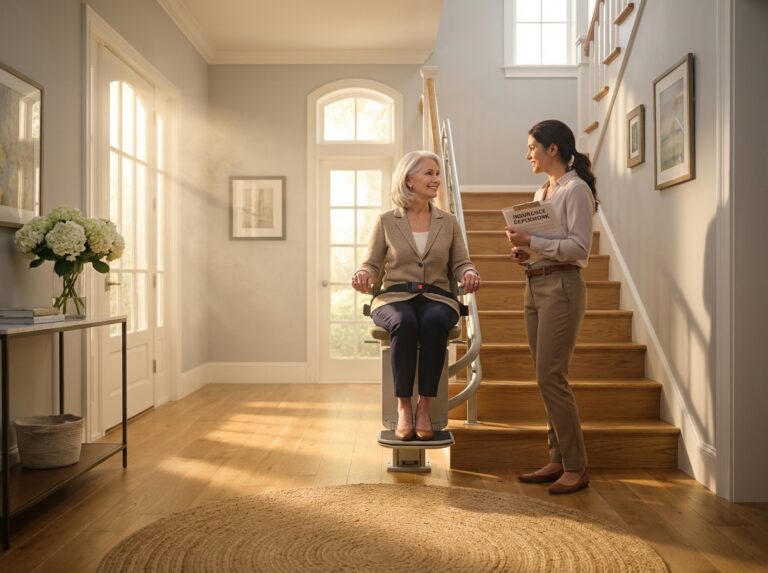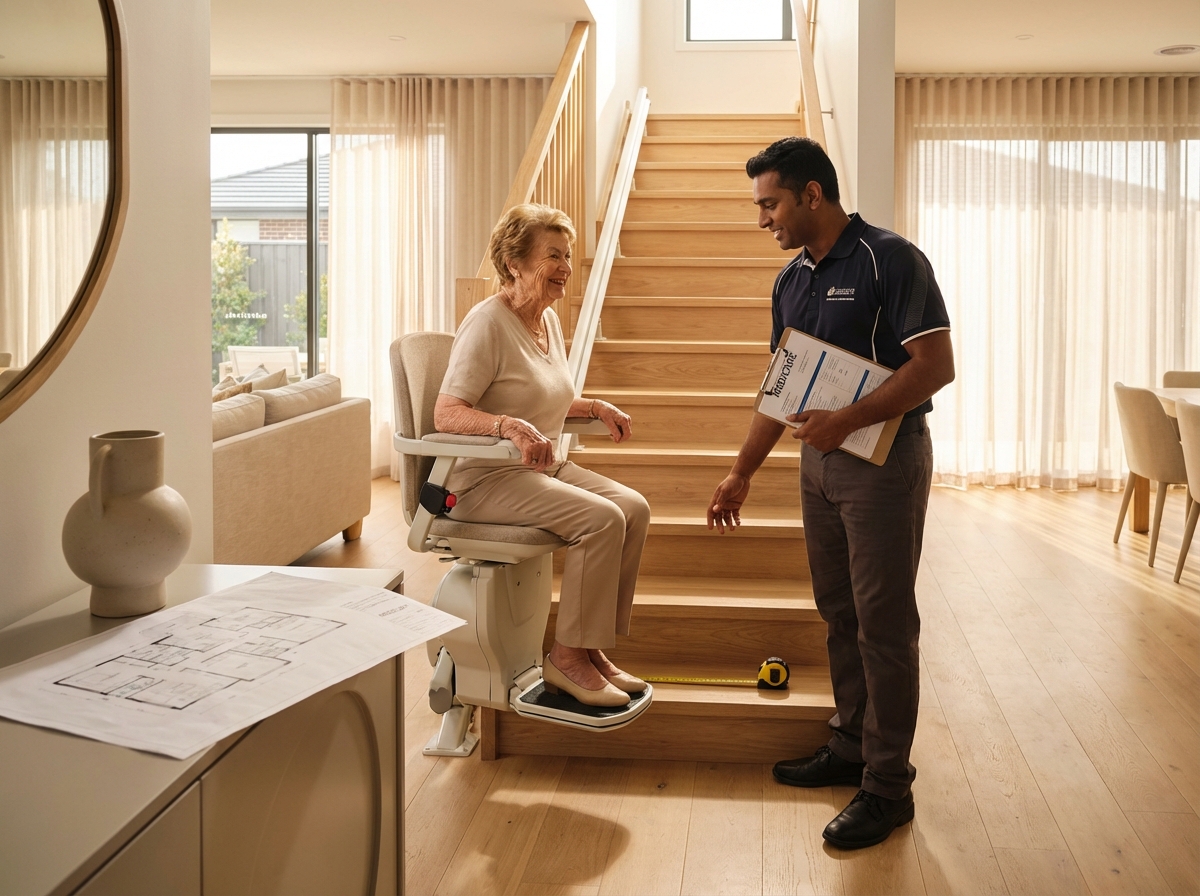
This guide explains whether Medicare Part B covers stairlifts in 2025 and walks through rules, exceptions, and practical alternatives. You’ll get clear guidance on medical necessity, documentation, Medicare Advantage and Medicaid options, installation planning, pricing expectations, and safety upgrades to make stair navigation safer at home.
How Medicare Part B defines durable medical equipment and why it matters
Understanding the landscape of Medicare Part B in 2025 requires a close look at how the program classifies medical gear. The core of this system rests on the definition of Durable Medical Equipment. This term is not just a label. It is a strict legal category that determines whether the government will help pay for an item. For any piece of equipment to qualify as Durable Medical Equipment, it must satisfy five specific requirements simultaneously. If an item fails even one of these tests, it falls outside the standard coverage umbrella of Part B.
The first requirement is that the equipment must be durable. In the eyes of Medicare, this means the item can withstand repeated use and has an expected life of at least three years. The second rule states the item must be used for a medical reason. It cannot be something used for comfort or convenience. Third, the equipment must be primarily medical in nature. This means a person who is not sick or injured would generally find no use for it. Fourth, the item must be used in your home. Finally, the equipment must be reasonable and necessary for the treatment of an illness or injury. These five pillars form the foundation of every coverage decision made by Medicare contractors.
The administrative side of this process is equally demanding. You cannot simply go to a store and buy a piece of equipment expecting a refund. The journey starts with a formal order from a physician. This doctor must be enrolled in Medicare and must have seen you in person for a face to face evaluation within six months of writing the prescription. During this visit, the doctor must document exactly why your mobility or health condition requires the specific device. This documentation is the evidence that Medicare Administrative Contractors review when a claim is submitted. These contractors are private organizations like Noridian or NGS that handle the heavy lifting of processing millions of claims across different regions of the United States.
The supplier you choose plays a critical role in this ecosystem. They must be enrolled in the Medicare program and have a valid Medicare supplier number. If a supplier is not enrolled, Medicare will not pay the claim even if the item is medically necessary. In 2025, many high cost items require prior authorization. This means the supplier must send the documentation to Medicare for approval before the item is delivered. If there is a high chance that Medicare will deny a claim, the supplier is legally required to give you an Advance Beneficiary Notice. This form explains that Medicare is unlikely to pay and that you will be responsible for the full cost if you choose to proceed. This is a common situation for items that sit on the border between medical necessity and home improvement.
Financial responsibility under Part B follows a predictable 80/20 split. Once you meet your annual Part B deductible, which stands at $257 for the 2025 calendar year, Medicare typically pays 80 percent of the approved amount. You are responsible for the remaining 20 percent coinsurance. However, this only applies if the item is officially recognized as Durable Medical Equipment. This is where the distinction between medical tools and home modifications becomes vital. Items that are commonly covered include manual wheelchairs, hospital beds, oxygen concentrators, and walkers. These items are portable. They are designed to address a specific physiological need without becoming a permanent part of your house. They are clearly medical tools that can be moved from one residence to another if you relocate.
Contrast these covered items with things that change the structure of a building. A wheelchair is a tool for the person. A ramp or a lift is often viewed as a change to the property. This distinction is the primary reason why Medicare doesn’t cover stair lifts because they don’t qualify as durable medical equipment (DME). While a wheelchair helps a person move, a stairlift is seen as an alteration to the staircase itself. This classification as a home modification rather than a medical device is a major hurdle for seniors. The rules are designed to provide equipment that treats a condition directly. They are not designed to fund structural changes to a private dwelling, even if those changes significantly improve safety or mobility. This rigid framework is why many people find the Medicare system frustrating when they are trying to age in place safely. Understanding these definitions is the first step in navigating the complex world of Medicare coverage for stair lifts and other mobility aids.
The burden of proof for medical necessity is high. It is not enough for a doctor to say that a patient has trouble with stairs. The documentation must show that the patient cannot perform activities of daily living without the specific piece of equipment. It must also show that no less expensive alternative would suffice. Medicare contractors look for very specific clinical notes. They want to see details about gait speed, balance scores, and the specific physical limitations that make stairs a barrier. If the paperwork is vague, the claim will be denied. This level of scrutiny ensures that Part B funds are used only for items that fit the narrow definition of Durable Medical Equipment established by federal law.
Why stairlifts are usually excluded from Medicare Part B
Medicare Part B has a very strict way of looking at medical equipment in 2025. Most people assume that if a doctor says you need a stairlift, the government will help pay for it. This is rarely the case. The agency follows a set of rules that often leaves seniors paying the full price out of pocket. The core of the problem is how the government defines what is medical and what is just a part of your house. Even though a stairlift helps you move, it does not meet the specific criteria for coverage.
The Classification of Home Modifications
A stairlift is almost always viewed as a home modification. This classification is the primary reason for the lack of coverage. Durable medical equipment must be something you can take with you if you move. It should be a standalone item like a walker. It could be a pair of crutches. A stairlift is different because it must be bolted to the stairs. It becomes a permanent fixture of the building. Because it is attached to the structure, Medicare treats it like a new roof. They treat it like a renovated bathroom. They do not pay for changes to the dwelling itself. You can read more about these specific rules in this Medicare and Stair Lifts: A Coverage Guide for Older Adults. The permanent nature of the installation disqualifies it from being portable medical gear.
Convenience Versus Medical Treatment
There is also the issue of what the equipment actually does. Medicare Part B covers items that serve a medical purpose. They want to see that the device is treating a specific physical ailment. A stairlift helps you get from the first floor to the second floor. To an auditor, this is a matter of convenience. It is a way to overcome an architectural barrier. It is not seen as a direct treatment for a disease. Even if you have severe arthritis, the lift is viewed as a safety upgrade for the home. It is not a medical tool for the body. This distinction is vital. Medicare focuses on the patient’s physical condition rather than the obstacles in their house. They believe the stairs are the problem. They do not believe the stairs are a medical condition.
The Standard List of Equipment
You can look through the official list of covered items and you will not find stairlifts. Medicare covers wheelchairs. It covers hospital beds. It covers oxygen equipment. These items are considered standard. Stairlifts are not on that list. This absence makes it very difficult for any claim to get through the system. Most suppliers are aware of this. They will tell you upfront that Part B will not cover the cost. You can find more details on why these claims fail at Does Medicare Cover Stair Lifts? No – GoodRx. The 2025 Part B rules remain firm on this point. The annual deductible is $257. The monthly premium is $185.00. Even if you meet these costs, the stairlift remains an excluded item.
The High Bar for Exceptions
The evidentiary bar for proving medical necessity is incredibly high. To even try for an exception, you would need a mountain of paperwork. A physician would have to write a detailed order. This order must explain why no other equipment can help. They would have to prove that the patient cannot live on a single level. They would need to show that the lift is the only way to prevent a life-threatening situation. Even then, the chances of approval are slim. Most people who try to bill Medicare Part B receive a denial letter almost immediately. The most common reason cited is that the item is not primarily medical in nature. The denial rate for these claims is nearly 100 percent.
Documentation and the Billing Process
If a provider does attempt to bill the government, they will likely ask you to sign an Advance Beneficiary Notice. This is a standard form. It warns you that Medicare is probably going to deny the claim. By signing it, you agree to pay the full cost if the denial happens. This is a common practice. It protects the supplier from losing money on an unapproved device. The documentation required for a claim is extensive. It includes a physician’s note on mobility impairment. It includes home layout specifics. It requires a detailed explanation of why alternatives are insufficient. Medicare Administrative Contractors review these files with a very critical eye. They look for any reason to classify the device as a home improvement.
Common Reasons for Claim Denials
Common reasons for denial are very specific. Auditors look for the word permanent in the installation description. They look for any mention of home modification. If the documentation shows the lift is attached to the floor, it is rejected. They also deny claims if the doctor’s notes focus on general safety. Medicare does not pay for items that only reduce the risk of a fall. They want to see a direct medical intervention. Because stairlifts are seen as a way to modify a house, they fall outside the scope of Part B. This leaves many families looking for other ways to fund these tools. You might find that a lift chair mechanism is covered because it is not attached to the house. A stairlift does not have that advantage. It remains a personal expense for the vast majority of American seniors.
Alternatives to Medicare Part B coverage and how to pursue them
Since Medicare Part B typically denies coverage for stairlifts, you must look at other programs to help with the cost. Many seniors find that private plans or state grants provide the support they need. These options have different rules and application steps. You should start your search by looking at your current insurance and local government resources.
Medicare Advantage Supplemental Benefits
Medicare Advantage plans are offered by private companies. These plans must provide the same coverage as Original Medicare. They often include extra benefits that Part B does not offer. In 2025 about twenty percent of these plans provide allowances for home safety. These are often called supplemental benefits. Some plans offer a specific dollar amount for home modifications. This might range from five hundred dollars to three thousand dollars. You should look for terms like home environmental modifications or assistive devices in your plan documents. These benefits can change every year. You must check your Summary of Benefits during the open enrollment period. This period runs from October 15 to December 7. If your plan offers this benefit, you will likely need a professional assessment. An occupational therapist can visit your home to document the need for a lift. You can then submit this to your insurance provider for approval.
Medicaid Home and Community Based Services
Medicaid is a joint federal and state program. It helps people with limited income. Many states use Home and Community Based Services waivers to pay for stairlifts. These waivers are designed to keep seniors in their homes. They are often cheaper for the state than paying for a nursing home. Every state has its own rules. For example, the state Medicaid program might help cover costs if the lift is essential for safety. Some states have high caps on these grants. Florida might provide up to fifteen thousand dollars for home modifications. California often allows up to ten thousand dollars. Texas has a lower cap of five thousand dollars. You should contact your state Medicaid office to start the process. Be prepared for a long wait. It often takes three to six months to get approval. You will need to show that your income and savings are below the state limits.
Department of Veterans Affairs Grants
Veterans have access to specific funding through the VA. There are two main grants for home upgrades. The Specially Adapted Housing grant is for veterans with service connected disabilities. For the 2025 fiscal year, this grant can provide up to 138,513 dollars. This is a large sum that can cover a full home remodel. The Home Improvements and Structural Alterations grant is more common. This is known as the HISA grant. It helps veterans with any chronic condition. If your disability is not related to your service, you can still get up to 6,800 dollars. This is a lifetime limit. To apply, you need a prescription from a VA doctor. You also need a written quote from a licensed installer. The VA will review your home layout to make sure the lift is the best solution.
Tax Deductions and Financing Options
Beyond grants and insurance, you should explore financial tools that can offset the cost. A stairlift is often considered a deductible medical expense if it is installed for medical reasons. You can deduct the cost of the equipment and the installation if your total medical expenses exceed 7.5 percent of your adjusted gross income. You must keep all receipts and a letter of medical necessity from your doctor. Consult a tax professional and review IRS Publication 502 for the current tax year to ensure eligibility. Additionally, most major manufacturers offer monthly payment plans through third-party lenders. You can also look into personal loans or specialized medical credit cards like CareCredit. Some local nonprofits or community groups provide low-interest loans for senior home safety.
Local Area Agencies on Aging and Nonprofits
Every county has an Area Agency on Aging. These organizations receive federal funds to help seniors live independently. They often manage small grant programs for home repairs. These grants usually range from one thousand to three thousand dollars. You can find your local office through the Eldercare Locator. There are also national nonprofits that help. Rebuilding Together is a large organization that fixes homes for low income seniors. They often provide the labor for free. You only pay for the materials. Some groups focus specifically on veterans. Organizations like Stairlifts for Vets or Lift to Freedom offer donated equipment. These programs are very popular. You should apply as early as possible because funds are limited.
| Funding Source | Typical Coverage Range | Estimated Timeline |
|---|---|---|
| Medicare Advantage | $500 to $3,000 | 30 to 60 days |
| Medicaid HCBS Waiver | $5,000 to $15,000 | 3 to 6 months |
| VA HISA Grant | Up to $6,800 | 60 to 90 days |
| Area Agency on Aging | $1,000 to $3,000 | Varies by county |
| Nonprofit Grants | $2,000 to $5,000 | Varies by funding |
How to Research and Verify Your Options
You must be proactive to find these funds. Start by calling a State Health Insurance Assistance Program counselor. They offer free advice on Medicare and Advantage plans. They can help you read your Summary of Benefits. If you are looking at Medicaid, visit an Aging and Disability Resource Center. These centers help you navigate the application process. You should always document your medical need. Ask your doctor to write a letter. This letter should describe your mobility issues. It should state that you are at a high risk of falling on the stairs. Keep copies of your home floor plans and photos of your staircase. Most grant programs will ask for these items. You should also get quotes from at least three different vendors. This shows the grant office that you are looking for a fair price. Having all your paperwork ready will speed up the approval process.
Planning installation and comparing stairlift types brands and costs
Choosing the right equipment requires understanding how different rail systems and lift types fit into your specific home layout. Since Medicare Part B identifies these as home modifications rather than durable medical equipment, the financial burden falls on you. This makes the planning phase critical for avoiding costly mistakes.
Stairlift Types and Typical Use Cases
Straight rail chairlifts are the standard solution for stairs without landings, turns, or curves. They use a prefabricated rail that installers cut to the exact length of your staircase. These are the most affordable and fastest to install. Curved rail chairlifts are necessary if your stairs have a 90 degree turn, a 180 degree switchback, or a landing in the middle. These rails are custom made in a factory to match the unique geometry of your home. Outdoor stairlifts are essentially straight or curved models built with weather resistant materials, UV protected plastics, and waterproof covers. They are ideal for porch steps or steep driveways. Vertical platform lifts, often called porch lifts, operate like a small open elevator. They are best for wheelchair users who cannot transfer to a chair seat. Through-floor lifts are a more permanent architectural change. They travel through a cut out in the ceiling, which keeps the staircase completely clear for other residents.
| Lift Type | Base Price Range | Typical Installed Cost (2025) | Maintenance Needs |
|---|---|---|---|
| Straight Rail | $2,500 – $4,500 | $3,000 – $6,000 | Annual lubrication, battery check |
| Curved Rail | $9,000 – $13,000 | $10,000 – $15,000+ | Custom rail alignment check |
| Outdoor Lift | $3,500 – $6,000 | $4,500 – $7,500 | Debris removal, motor seal check |
| Vertical Platform | $10,000 – $25,000 | $12,000 – $30,000 | Hydraulic or screw drive service |
| Through-Floor | $15,000 – $22,000 | $18,000 – $28,000 | Safety sensor calibration |
Evaluating Vendors and Installers
You should only work with companies that employ certified installers. Look for technicians trained by the manufacturer or those with National Association of Accessibility Equipment Specialists credentials. A reputable vendor will always offer a free on site measurement. During this visit, they should check the power source, measure the stair width, and assess the landing clearance. Lead times for straight lifts are usually one to two weeks, but custom curved rails can take six weeks to manufacture. Always ask for proof of installer liability insurance of at least one million dollars. This protects you if the installation causes structural damage to your home. Check if your local building codes require a permit. In over 40 states, a stairlift installation requires a mechanical permit and a post install inspection by a state official.
Selection Criteria Based on User Needs
Weight capacity is the first technical spec to verify. Standard models handle 300 pounds, but heavy duty models like the Bruno Elite can support up to 400 pounds. Seat style matters for long term comfort. Look for padded seats with adjustable heights. A swivel seat is a non negotiable safety feature. It allows you to turn the chair at the top landing so you step off onto the floor rather than the stairs. Remote controls are standard on most 2025 models. They allow you to call the lift if it is parked on a different floor. Battery backups are essential. Most units provide 10 to 24 trips during a power outage. Consider the rail noise and track footprint. Modern units should operate below 50 decibels. If your stairs are narrow, look for a folding rail that tucks away when not in use.
Comparison and Negotiation Tips
Compare at least three brands. Bruno, Stannah, and Acorn are the market leaders, but their pricing structures vary significantly. Read independent reviews on sites like ConsumerAffairs to see how different models perform after the warranty expires. When you have multiple quotes, use them to negotiate. You can often get a 10% discount or a free extended warranty by showing a competitor’s lower price. Ask about the buy back policy. Some companies will pay you a few hundred dollars to remove the rail if you no longer need the lift in the future. Expect a warranty that covers the motor and the rail for at least five to ten years, with a shorter period for labor and smaller parts.
What to Expect on Installation Day
Installation for a straight lift takes about four hours. Curved lifts may take a full day. The rail is bolted to the stair treads, not the wall, so your drywall remains untouched. Once the work is done, use an inspection checklist. Test the obstruction sensors by placing a box on the stairs. The lift should stop immediately. Verify that the seat locks firmly in the swivel position. Ensure the technicians show you how to use the manual override tool in case of a total motor failure. After the lift is in place, you might find that other small changes are needed to make the entire staircase safer. This often leads to considering complementary upgrades like improved lighting or handrail extensions.
Home safety upgrades that complement a stairlift
A stairlift is a significant investment for any home, but it rarely works in isolation. While the lift handles the vertical travel, the areas around the stairs often need attention to ensure a truly safe environment. Many seniors find that small, targeted upgrades can bridge the gap between a functional lift and a fully accessible home. These changes often cost much less than the lift itself and provide immediate protection against falls.
Improved Stair Visibility
Lighting is the most common oversight in home safety. Many older homes have dim hallways or single bulbs that cast long shadows over the steps. Installing motion sensor LED strips along the baseboards or under the handrails can illuminate the path without requiring you to fumbling for a switch. These systems are inexpensive, often ranging from 50 to 200 dollars. Another vital visual aid is contrast nosing. By adding a strip of high-contrast tape or paint to the edge of each step, you help the eye distinguish where one tread ends and the next begins. This is especially helpful for those with low vision or depth perception issues. These strips usually cost between 20 and 50 dollars for an entire staircase.
Traction and Grip
Slippery wooden or tiled stairs are a major hazard. Even if you use a stairlift, you still need to navigate the landings safely. Non-slip treads or adhesive grip strips provide essential traction for your feet. These materials cost about 5 dollars per foot and can be installed in an afternoon. Handrails are another critical component. Most building codes require at least one rail, but having continuous handrails on both sides of the stairs is much safer. A continuous rail ensures you never have to let go as you transition from the stairs to the landing. Extending a rail or adding a second one typically costs between 200 and 500 dollars. You should also check the stair width clearance. A standard stairlift rail takes up about 6 to 10 inches of space. If your staircase is narrow, you must ensure there is still enough room for others to walk past the unit safely.
Broader Accessibility Improvements
Safety does not stop at the staircase. Many people find that a stairlift works best when paired with bathroom modifications. Grab bars near the shower and toilet provide stability during transitions. While Medicare Part B generally views these as home modifications, some Medicare Advantage plans might offer a small allowance for them. You can read more about these distinctions in this Medicare and Stair Lifts: A Coverage Guide for Older Adults. Raised toilet seats are another affordable fix, usually priced between 30 and 100 dollars. For the exterior of the home, ramps or threshold ramps can eliminate small trips at the doorway. A portable ramp might cost 500 dollars, while a permanent wooden or aluminum ramp can exceed 2,000 dollars. If you use a wheelchair to reach the stairlift, you might also need to widen doorways, which can cost between 500 and 2,000 dollars per door.
How Upgrades Interact With Your Stairlift
Your choice of stairlift features often depends on these home modifications. For example, a swivel seat is essential for safe dismounting at the top of the stairs. However, a swivel seat requires at least 36 inches of landing clearance to operate correctly. If your landing is too small, you might need to move a wall or choose a different lift model. Power needs are another factor. Most lifts run on a standard 120V outlet, but you may need an electrician to install a dedicated circuit near the stairs. For outdoor lifts, you must consider weather protection. Adding a small awning or heat tape to the steps can prevent ice buildup that might interfere with the lift rail. These interactions are why a professional assessment is so valuable.
Professional Guidance and Cost-Benefit Analysis
An Occupational Therapist or a Certified Aging-in-Place Specialist can perform a home assessment to help you prioritize these interventions. These experts look at how you move through your specific space. An assessment usually costs between 150 and 500 dollars. They can tell you if five small upgrades like grab bars and better lighting will suffice, or if a stairlift is truly necessary. When budgets are tight, a cost-benefit approach is helpful. If you have 5,000 dollars, you could buy a basic straight stairlift. Alternatively, you could spend 2,000 dollars on a suite of minor upgrades including lighting, rails, and bathroom bars, then save the remaining 3,000 dollars for future needs. However, if the stairs are a complete barrier to your bedroom or bathroom, the stairlift becomes the priority regardless of other minor fixes.
| Safety Upgrade | Estimated Cost | Primary Benefit |
|---|---|---|
| LED Motion Lighting | $50 to $200 | Eliminates shadows and trip hazards |
| Contrast Nosing | $20 to $50 | Improves depth perception on steps |
| Non-slip Treads | $5 per foot | Prevents feet from sliding on wood |
| Continuous Handrails | $200 to $500 | Provides constant support for balance |
| Bathroom Grab Bars | $100 to $300 | Safe transitions in wet areas |
| Threshold Ramps | $100 to $400 | Smooths out small doorway lips |
Final Considerations for Home Safety
Every home is different, so your safety plan should be personal. Start with the most dangerous areas first. For most seniors, the bathroom and the stairs represent the highest risk. By combining a reliable stairlift with these smaller upgrades, you create a comprehensive safety net. This layered approach ensures that even when you are not using the lift, your home remains a secure place to live. Always consult with a specialist before making structural changes to ensure they meet local building codes and your specific physical requirements.
Final takeaways and next steps
The reality of navigating Medicare in 2025 remains consistent regarding home modifications. While traditional Medicare Part B does not pay for stairlifts because they are classified as home modifications rather than durable medical equipment, many alternative funding sources exist for those who plan carefully. You can read more about these specific rules at NCOA to understand why the classification stays so rigid.
The path to securing a stairlift involves a specific sequence of actions. First, schedule a formal medical assessment with your primary physician or a physical therapist. Ask them to write a detailed note about your mobility limitations, stating clearly that you have a high risk of falling on stairs and describing how a stairlift would improve your ability to live independently. This note is vital for Medicaid waivers, veteran grants, and potential tax deductions.
Next, investigate your specific insurance coverage for 2025. If you have a Medicare Advantage plan, check the Summary of Benefits or speak with a State Health Insurance Assistance Program counselor to identify if your plan includes a home modification benefit. Simultaneously, contact your local Medicaid office or visit the Eldercare Locator website to inquire about Home and Community Based Services waivers, which can cover the full cost of a straight stairlift in many states. Veterans should call the VA at 1-800-827-1000 to verify eligibility for HISA or Specially Adapted Housing grants.
Once you understand your budget, gather at least three quotes from different installers. Reputable companies like Bruno, Stannah, or Acorn should provide a free on site survey. Ask about the difference in price between new and refurbished models, as a used stairlift can save you up to fifty percent of the cost. Ensure the quotes include the price of the unit, the labor for installation, and any necessary permits. To protect your investment, verify that your chosen installer is certified by the National Association of Accessibility Equipment Specialists and carries at least one million dollars in liability insurance. Finally, keep every medical record and receipt in a dedicated folder to prove medical necessity to any agency and for your tax preparer at the end of the year.
References
- Does Medicare Cover Stair Lifts? No – GoodRx — No. Original Medicare does not cover stair lifts. Under current Medicare policy, stair lifts are viewed as home modifications and not durable medical equipment.
- Does Medicare Cover Stair Lifts? Your Guide for 2025 – Mair Agency — If you have limited income and resources, your state Medicaid program might help cover lift chair costs not covered by Medicare.
- Are Stair Lifts Covered by Medicare? – Options HME — The short answer is no. Stair lifts are not covered by Medicare because Medicare identifies a stair lift as a home modification rather than Durable Medical …
- Does Medicare Cover Stair Lifts? Costs, Coverage, and Alternatives … — Medicare Part B does not cover stair lifts because they are classified as home modifications rather than durable medical equipment (DME).
- Medicare and Stair Lifts: A Coverage Guide for Older Adults — Will Medicare pay for a stair lift? No—since they aren't considered medically necessary, Medicare does not cover them. Find out average stair …
- Medicare coverage for stair lifts – Medical News Today — Medicare coverage does not include stair lifts, as they are considered home modifications or assistive devices rather than durable medical equipment (DME).
- Can I Qualify for a Free Stair Lift? – Lifeway Mobility — Most people are disappointed to learn that neither Medicare nor private health insurance plans typically provide coverage for stair lifts. While …
- Does Medicare Cover Stair Lifts? | ConsumerAffairs® — Medicare doesn't cover stair lifts because they don't qualify as durable medical equipment (DME).
EMPTY