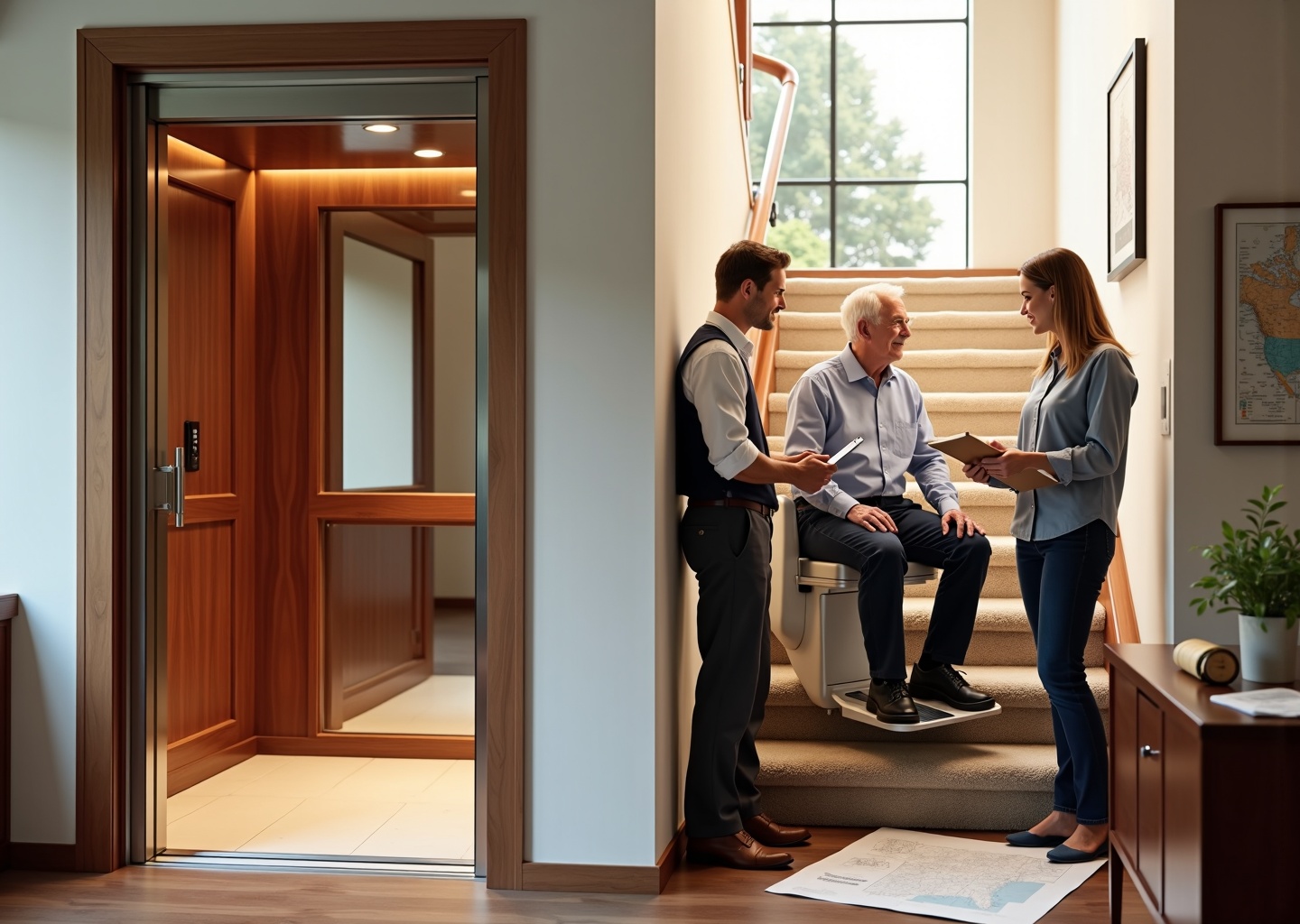
Choosing between a home elevator and a stairlift affects budget, floorplan and resale value. This article compares upfront and lifetime costs, space and structural needs, installation timelines, financing and safety tradeoffs for U.S. homeowners and caregivers. Use this guide to weigh practical constraints and long‑term benefits when planning accessibility upgrades for safer stairs and independent living.
How home elevators and stairlifts work and who they suit best
Understanding the mechanics of a home elevator versus a stairlift is the first step in deciding which solution fits your life and your home. While both aim to make navigating multiple floors safer and easier, they operate on fundamentally different principles and are designed for very different needs.
A stairlift is essentially a chair that travels along a rail secured directly to your staircase treads. It’s a straightforward system designed to transport one person up and down a single flight of stairs. Modern stairlifts are very quiet, producing a soft hum similar to a kitchen appliance. There are two main types.
- Straight Stairlifts
These are the most common and affordable models. They run on a standardized, straight rail that is cut to the length of your staircase. Because the components are mass-produced, installation is quick, often completed in just a few hours. - Curved Stairlifts
If your staircase has a landing, a turn, or a spiral, you’ll need a curved stairlift. The rail for these models must be custom-fabricated to precisely match the unique contours of your stairs. This process involves detailed measurements and manufacturing, making them more expensive and extending the installation timeline.
Beyond the rail type, stairlifts come with several options. Indoor models are standard, but weatherproof outdoor versions are available for porch or deck stairs. The most common configuration is a traditional seat, but for those with limited knee or hip flexibility, a perch seat allows the user to stand or lean during travel. For larger individuals, heavy-duty models are available with wider seats and increased weight capacities, often supporting up to 500 pounds.
A stairlift is an ideal match for individuals who can walk but find stairs challenging or dangerous. This includes older adults aging in place who are still mobile, people recovering from surgery, or anyone with a condition that causes fatigue or balance issues. The key requirement is the ability to safely get in and out of the chair on your own. A major advantage is that stairlifts run on battery power, which recharges when parked, so they remain operational during a power outage. However, they can’t transport a wheelchair, walker, or groceries, and they can make the staircase feel narrow for others.
A home elevator, on the other hand, is a much more integrated solution. It’s a small, enclosed cab that travels vertically through a shaft, connecting multiple floors of your home. It functions like a miniature version of a commercial elevator and becomes a permanent part of your home’s structure. The noise from a home elevator depends on the drive system; pneumatic and traction systems are generally quieter than older hydraulic models. There are several drive systems to choose from.
- Hydraulic Elevators
These are a popular residential choice, known for a smooth, quiet ride. They use a hydraulic pump to move a piston that raises and lowers the cab. They typically require a separate machine room for the equipment and a shallow pit dug below the lowest floor. - Traction Elevators
Operating with a counterweight system, traction elevators are very energy-efficient. Modern “machine-room-less” (MRL) designs house the compact machinery within the elevator shaft itself, saving space. - Pneumatic (Vacuum) Elevators
These are visually striking, often featuring a transparent cylindrical cab that is moved by changes in air pressure. They are self-contained, require no pit or machine room, and have a minimal footprint, but generally have a lower weight capacity. - Screw-Driven Elevators
This system uses a motor to turn a large threaded steel screw, which moves the cab up and down. It’s a mechanically simple and reliable option that also avoids the need for a machine room.
Home elevators typically travel at a safe, controlled speed and have weight capacities ranging from 750 to 1,000 pounds, easily accommodating a wheelchair user and a companion. Finishes are highly customizable, from wood paneling and flooring to lighting, allowing the cab to blend seamlessly with your home’s decor. An elevator is the superior choice for full-time wheelchair users, as it provides seamless floor-to-floor access without requiring a transfer. It’s also a practical solution for multi-generational families or anyone planning their “forever home,” as it can transport laundry, luggage, and people of all mobility levels. In an emergency, however, an elevator is not a designated escape route and relies on a battery backup system solely for lowering the cab to the next floor during a power outage.
Deciding between these options is a significant choice. For a truly personalized recommendation, it’s wise to consult an accessibility-focused occupational therapist. They can assess your current and future mobility needs to determine which solution offers the most long-term benefit. Following that, a consultation with a certified installer is essential to evaluate your home’s layout and structural requirements.
Purchase price installation and ongoing expenses
When you start looking at prices, the difference between a stairlift and a home elevator becomes very clear. A stairlift is the more accessible option for most budgets. For a standard straight staircase, homeowners in the U.S. can expect to pay between $2,500 and $5,000 for the unit and installation in 2025. If your staircase has curves, turns, or intermediate landings, the price increases substantially. A custom-curved stairlift typically ranges from $8,000 to $12,000 or more, as the rail must be fabricated specifically for your home’s layout.
A home elevator is a significant investment, comparable to a major home renovation. The total cost, including the equipment and all necessary construction, generally falls between $25,000 and $60,000 for a basic two-stop model. More complex projects serving three or more floors, or those with high-end custom finishes like glass walls or hardwood interiors, can easily exceed $70,000.
Several factors influence these final costs.
- Model and Customization
For stairlifts, the primary cost driver is the rail; a straight rail is mass-produced, while a curved one is a custom engineering project. For elevators, the drive system (hydraulic, traction, or pneumatic), cab size, and finish materials all impact the price. - Structural Modifications and Site Prep
A stairlift requires almost no structural change, attaching directly to the stair treads. Installation of a straight stairlift is often completed in just a few hours, while a custom-curved model may take a full day. An elevator, however, requires a multi-week construction process. This includes building a shaft, creating a pit in the foundation (for hydraulic models), and ensuring adequate overhead clearance. These modifications can involve cutting through floors, moving plumbing, and reinforcing structural supports, adding thousands to the project cost. - Labor and Permits
Installation labor for a stairlift is minimal. For an elevator, it’s a major expense. Local labor rates vary widely across the country. You will also need building permits for an elevator, which can add several hundred to over a thousand dollars to the total, while stairlifts rarely require them.
Ongoing expenses also differ significantly. A stairlift requires an annual preventive maintenance visit, which typically costs $200 to $400. The onboard batteries will also need replacement every three to five years, at a cost of about $200 to $400. A home elevator demands a more rigorous and expensive maintenance schedule. Expect to pay for an annual or semi-annual service contract, which can range from $500 to $1,000 per year. This service is crucial for safety and ensures the elevator complies with local inspection requirements.
Warranties for stairlifts often cover parts for two to three years and labor for the first year. Elevators usually come with a similar initial warranty, but extended service plans are more common and highly recommended given the complexity of the machinery.
To understand the true cost for your home, you must get detailed quotes.
- Contact Multiple Installers
Reach out to at least three reputable, certified installers in your area. This allows you to compare not just price, but also their approach and professionalism. - Prepare for the Site Visit
An installer will need to visit your home to take precise measurements, inspect the staircase or proposed elevator location, and assess your home’s electrical and structural systems. Be ready to discuss your mobility needs and desired features. - Request a Line-Item Estimate
Do not accept a single lump-sum price. Ask for a written, itemized estimate that clearly separates the costs for the equipment, freight, labor, permits, electrical work, and any necessary construction or site prep. This transparency is essential for making an informed decision and avoiding surprise charges. For a general idea of what to expect, you can review guides like this one from ConsumerAffairs.
Space requirements structural changes and building code considerations
Beyond the initial price tag, the most significant difference between a home elevator and a stairlift is the physical space they occupy and the structural changes your home will need. A stairlift works with your home’s existing layout, while an elevator requires creating an entirely new path. Understanding these footprints is key to deciding which solution is practical for your property.
A home elevator is a substantial construction project. It requires a dedicated vertical shaft, or hoistway, that passes through each floor it serves. This means cutting large, perfectly aligned openings in your floors and ceilings. A typical residential elevator shaft needs a clear interior space of about 4 feet by 5 feet, though compact models can fit into slightly smaller areas. The project doesn’t stop there.
- Pit Requirement
Most elevator types, especially hydraulic models, need a pit dug below the lowest floor. This pit is usually 12 to 24 inches deep and houses mechanical components. If your home is built on a concrete slab, this involves breaking and removing concrete, which adds complexity and cost. - Headroom or Overhead
The elevator also needs extra space above the top floor landing. This headroom, typically around 8 feet, is necessary for the cab and machinery to operate safely. This can be a challenge in homes with low attic clearance or finished upper floors. - Load-Bearing Considerations
An elevator and its shaft add significant weight to your home’s structure. The hoistway must be framed to support itself and the dynamic loads of the moving elevator. This almost always requires consulting a structural engineer to assess your home’s foundation and framing to ensure it can handle the new load. They will specify any necessary reinforcements.
To simplify construction, some manufacturers offer prefabricated or modular shaft kits. These are engineered structures that can be assembled on-site, often reducing construction time and mess compared to a traditional, custom-built shaft framed by a contractor.
Stairlifts, in contrast, have a much smaller and less invasive footprint. They are designed to attach directly to your existing staircase treads, not the wall, so no major structural modifications are needed. The support brackets use small, discreet screws. If the stairlift is removed in the future, the screw holes are easily filled and repaired, leaving little to no evidence it was ever there. However, your staircase must meet certain criteria.
- Stair Width
Most stairlifts require a minimum staircase width of 29 to 30 inches to allow the chair to pass and leave enough room for others to walk by. Narrower staircases may not be suitable. - Landing Clearances
You need clear space at both the top and bottom of the stairs for safely getting on and off the chair. A clearance of about two feet is standard. If a doorway or threshold is at the bottom of the stairs, a folding or retractable rail option is often necessary to prevent a tripping hazard. - Curved Staircases
While stairlifts can be fitted to curved stairs, U-shaped landings, or spiral staircases, this significantly increases complexity. The rail must be custom-fabricated to match every turn and angle of your specific staircase, which takes longer to manufacture and install.
A middle-ground solution is the Vertical Platform Lift, or VPL. A VPL is like a mini-elevator, designed to lift a person in a wheelchair or scooter vertically over a short distance, usually up to 14 feet. They are often used for porches, decks, or to get from a garage to the main living level. VPLs don’t require a fully enclosed shaft, making them less structurally demanding than a full elevator, but they provide more accessibility than a stairlift for wheelchair users.
Navigating the rules and regulations is a critical step. Home elevators almost universally require a building permit from your local municipality. The installation will be subject to inspections to ensure it complies with safety and building codes. Stairlifts, because they don’t typically involve structural changes, often do not require a permit, but it’s always best to check. Fire egress is another consideration; an elevator cannot be used as an escape route in a fire. While a stairlift rail can slightly narrow a staircase, modern designs are built to be as unobtrusive as possible.
It’s important to note that the Americans with Disabilities Act (ADA) standards are guidelines for public and commercial buildings; they are not legally required for private residences. However, they can be a useful reference for creating a truly accessible space. Before committing to any project, you must do your homework. Always check with your local building department about permit requirements. If you live in a historic home or a designated historic district, there may be strict limitations on modifications. Similarly, your Homeowner’s Association (HOA) will likely have rules and an approval process for this type of major home alteration. For any project involving an elevator or changes to load-bearing walls, hiring a structural engineer is not just recommended; it’s essential for the safety and integrity of your home.
Financing tax considerations and assistance programs
After figuring out the physical fit of a stairlift or elevator in your home, the next big question is how to manage the financial fit. The price tags can feel daunting, but a variety of financing routes, tax considerations, and assistance programs can bring these essential upgrades within reach. Let’s walk through the options U.S. homeowners most commonly use.
Many people turn to their home’s value to fund the project. A home equity loan gives you a lump sum of cash with a fixed interest rate, which is great for a project with a clear, one-time cost. A Home Equity Line of Credit (HELOC), on the other hand, works more like a credit card, allowing you to draw funds as needed up to a certain limit. This can be useful if your project involves multiple stages. For both, you’ll generally need good credit and significant equity in your home. Terms often range from 5 to 30 years, with interest rates in late 2025 hovering around 8-10%. If you don’t have sufficient home equity or prefer not to use it, a personal loan is another option. These are typically unsecured, meaning your home isn’t collateral, but that results in higher interest rates (often 10-20% APR) and shorter repayment terms, usually 3 to 7 years.
For more modest projects, the federal government offers FHA Title I home improvement loans through approved lenders. These loans, which can go up to $25,000, are insured by the Federal Housing Administration and don’t require you to have equity in your home, making them accessible for newer homeowners. Finally, don’t overlook financing offered directly by the manufacturer or dealer. Many provide payment plans or partner with lenders, sometimes offering promotional periods with 0% interest for the first year. Specialized third-party medical financing companies also exist, offering loans specifically for health-related expenses.
Beyond borrowing, you may be able to reduce your net cost through tax deductions or direct assistance. Under IRS rules, you may be able to deduct the cost of a stairlift or elevator as a medical expense. The key is that the modification must be primarily for medical care. You can only deduct the portion of your total medical expenses that exceeds 7.5% of your Adjusted Gross Income (AGI). For permanent improvements like an elevator, the deduction is limited to the amount the expense exceeds any increase in your home’s value. Because a stairlift is often considered removable and may not add to the home’s market value, its full cost is more likely to be deductible. To make a claim, you absolutely need a doctor’s prescription or a letter of medical necessity explaining why the upgrade is required. Always consult a tax professional to understand your specific situation.
When it comes to health insurance, it’s important to set realistic expectations. Original Medicare does not cover stairlifts or home elevators, as it classifies them as home modifications rather than durable medical equipment. Some private Medicare Advantage (Part C) plans might offer limited benefits, but this is uncommon. Medicaid, however, can be a significant source of help. Coverage varies by state, but many offer Home and Community-Based Services (HCBS) waivers that can fund “environmental accessibility adaptations.” These waivers are designed to help people remain in their homes rather than move to institutional care.
For veterans, the Department of Veterans Affairs (VA) offers powerful assistance. The Specially Adapted Housing (SAH) grant, worth up to $117,014 in 2025, can help veterans with certain service-connected disabilities build, buy, or modify a home. The Special Home Adaptation (SHA) grant provides funding for other specific disabilities. Many states also have assistive technology programs or vocational rehabilitation grants that may help cover costs, particularly if the modification enables you to work. Local nonprofits like Rebuilding Together may also offer assistance to low-income homeowners.
Navigating these programs requires diligence. Program availability, funding levels, and eligibility rules change annually, so you must verify all information for 2025. Start by contacting your local Area Agency on Aging; they are a fantastic resource for connecting with local and state programs. Other key contacts include your state’s vocational rehabilitation office and your regional VA benefits office. Meticulous recordkeeping is non-negotiable. For any potential tax deduction or reimbursement, keep a dedicated file with:
- The doctor’s letter of medical necessity.
- Copies of all quotes from installers.
- The final, itemized invoice.
- Proof of payment, such as canceled checks or credit card statements.
This documentation is your proof that the expense was both necessary and paid for, forming the backbone of any claim you make.
Value impact safety outcomes and long term adaptability
When you invest in a significant home upgrade, you’re not just solving an immediate problem; you’re making a long-term decision that affects your home’s value, safety, and future adaptability. Deciding between a home elevator and a stairlift goes beyond the initial cost and installation. It’s about how each choice shapes your daily life and your property’s appeal to future buyers.
From a real estate perspective, a home elevator is a permanent, structural improvement. In markets that cater to active adults or buyers seeking universal design features, a professionally installed elevator can be a significant value-add. Industry studies, including reports from the National Association of Home Builders (NAHB), have shown that homes with universal design elements can command a premium. An elevator is a centerpiece of this design philosophy, often increasing a home’s market value by 5% to 10%, especially in communities with an older demographic. It’s viewed as a luxury and a practical feature that enhances convenience for everyone, from carrying groceries to accommodating multi-generational family members.
A stairlift, on the other hand, is typically seen as personal medical equipment rather than a permanent home upgrade. Because it’s a removable solution attached to the stair treads, it rarely adds to the home’s appraised value. For some potential buyers, a visible stairlift might signal that the home is not suited for them, or they may view it as something they’ll need to pay to have removed. However, its non-permanent nature can also be a selling point. It doesn’t alter the home’s structure, and it can be professionally uninstalled with minimal trace, preserving the original staircase.
Safety is a primary driver for both installations. According to the Centers for Disease Control and Prevention (CDC), falls are a leading cause of injury among older adults, with millions treated in emergency departments each year. Stairs are a common location for these incidents. Both elevators and stairlifts drastically reduce this risk, but they do so with different sets of safety features.
- Stairlifts come standard with features designed for user security. A seatbelt is fundamental. Obstruction sensors on the footrest and carriage stop the lift immediately if it encounters an object on the stairs. A swivel seat allows the user to turn away from the open staircase at the top landing, enabling them to get on and off safely. Nearly all modern units run on battery power, which recharges when parked, ensuring the lift works even during a power outage.
- Home elevators have a more robust, integrated safety system. Door interlocks are crucial; they prevent the elevator from moving unless all doors are securely closed and locked, and they prevent hoistway doors from opening if the cab is not present. An emergency lowering system, often battery-powered, ensures you can safely exit the elevator during a power failure. Other features include an in-cab emergency phone, alarm button, and safety brakes. For hydraulic or roped models, a pit at the bottom of the shaft contains safety mechanisms that stop the cab in a worst-case scenario.
Looking at long-term adaptability, an elevator offers far greater flexibility for aging in place and multi-generational living. It can accommodate a wheelchair, a walker, a parent carrying a child, or even bulky luggage. Its utility evolves with the family’s needs over its 20 to 25-year lifespan. A stairlift is a more targeted solution. It serves an individual who can transfer from a wheelchair or walker to the lift’s seat. If mobility needs change and a person becomes fully reliant on a wheelchair, a stairlift may no longer be a viable solution. A well-maintained stairlift can last 10 years or more.
When it’s time to sell, transparency is key.
Documenting Your Upgrade
For a home elevator, you must include it in the seller’s disclosure as a permanent fixture. Present it as a high-end feature. Provide potential buyers with all documentation, including the original installation permits, warranty information, and a log of professional maintenance. Frame it as an investment in accessibility and convenience that future-proofs the home.
Presenting a Stairlift
For a stairlift, you have more options. You can list it as an included item for buyers who may need it. Alternatively, you can offer to have it professionally removed and the stairs patched before closing. This flexibility can reassure buyers who don’t need the device, making it a non-issue in the sale. Either way, be upfront about its presence and your willingness to accommodate the buyer’s preference. This approach turns a personal medical device into a negotiable and manageable part of the home sale process.
Final recommendations and checklist for choosing the right solution
Making the final decision between a home elevator and a stairlift can feel overwhelming, but breaking it down into a logical sequence makes it manageable. This is not just about buying a piece of equipment; it is about investing in safety, independence, and your future at home. The following checklist provides a step-by-step process to guide you from initial thought to a confident choice.
-
Assess Mobility Needs First and Foremost
Before you look at a single brochure, take a realistic look at your mobility. Is the challenge simply climbing stairs, or is a wheelchair or walker part of daily life? Crucially, consider the future. A talk with your doctor or an occupational therapist can provide a realistic prognosis. A solution that works today must also work for your anticipated needs in five or ten years. If mobility is likely to decline or if a wheelchair is already in use, an elevator or vertical platform lift (VPL) immediately becomes a more practical long-term option. -
Measure Your Space and Get a Feasibility Check
Get out a tape measure. For a stairlift, you need to know the width of your staircase; most models require at least 29 inches of clear space. For an elevator, you need to identify a potential location for a shaft, typically a 4×4 to 5×5 foot space, often in a closet, corner of a room, or attached to an exterior wall. Most reputable installers offer a free, no-obligation home assessment to tell you what is physically possible in your home before you get too deep into the process. -
Get 2–3 Competitive Written Quotes
Never settle for the first price you hear. Contact at least three different certified local installers. Insist on a detailed, written quote that outlines the total cost, including the equipment, all necessary construction or electrical work, permits, and installation labor. The quote should also provide a clear timeline from start to finish. This protects you from surprise costs and helps you compare apples to apples. -
Verify Permits and HOA Rules
A stairlift rarely requires a building permit since it does not alter your home’s structure. A home elevator almost always does. Call your local building department early to understand the requirements, inspection schedule, and fees. If you live in a community with a Homeowners Association (HOA), review your bylaws and get written approval before signing any contracts. Some HOAs have specific rules about modifications, especially those visible from the outside. -
Explore All Financing and Grant Options
Once you have quotes, you can explore funding. Look into home equity loans (HELOCs), FHA Title I loans for home improvements, or personal loans. Veterans should immediately contact the Department of Veterans Affairs about grants like the SAH or SHA. Also, reach out to your local Area Agency on Aging; they are an excellent resource for state or local grants and assistance programs you may not know about. -
Plan for Maintenance and Emergencies
Ask installers about their annual service plans, which typically cost $200-$400 for a stairlift and $500-$1,000 for an elevator. Understand the warranty for parts and labor. Most importantly, clarify the emergency procedures. Both devices should have battery backups, but you need to know how they work, how many trips you get on a single charge, and who to call for 24/7 emergency service. -
Consult a Real Estate Agent About Resale Impact
If you plan to sell your home in the next decade, this is a worthwhile step. A local real estate agent can offer insight into your specific market. Generally, a stairlift has a neutral impact on value and is often removed before a sale. A well-integrated home elevator, especially in areas popular with retirees, can increase your home’s value by 5-10% and make it appeal to a wider range of buyers.
Your Quick Recommendation Framework
Choose a stairlift when: Your primary concern is budget. You need a solution for a single, straight flight of stairs. The need is temporary, such as for recovery from surgery (renting is a great option here). The user can safely get in and out of the chair and does not use a wheelchair full-time in the home.
Choose a home elevator when: The budget allows for a significant investment ($25,000+). The user relies on a wheelchair or has a progressive condition. Your home has multiple stories. You are planning to age in place for the long term and want to add lasting value and accessibility to your property.
Choose a Vertical Platform Lift (VPL) when: You need to provide wheelchair access over a short vertical distance, like a porch, deck, or up to a garage landing. It offers a practical, less expensive alternative to a full elevator when only a few feet of lift are needed.
Practical Next Steps
Your first action item is to schedule one or two free in-home assessments with certified mobility equipment dealers in your area. You can find them through manufacturer websites or by searching for “home accessibility specialists near me.” During the assessment, they will take precise measurements, discuss your mobility needs, and explain which models are suitable for your home and budget. This initial consultation is the best way to turn abstract possibilities into a concrete plan.
References
- Stair Lifts vs. Home Elevators: What's Right for Your Home? — Stair lift installation typically starts at around $2,500 to $5,000 for straight models and can go up to $12,000 or more for curved staircases.
- Home Elevator Vs. Stairlift: Which is the Right for Me? – Harmar — Installing a stairlift is significantly less expensive than a home elevator. Most standard straight stairlifts cost between $3000-$5000, …
- Home Lift vs Stairlift: Which is best for me? – Felgains — Due to the more complex nature of a home lift and its installation, home lifts are significantly more expensive than stairlifts.
- How Much Does a Residential Elevator Cost? [2025] – Mr. Handyman — How much does a home elevator cost compared to a stair lift? Installing a home elevator is typically more expensive than building a stair lift.
- Stairlifts vs. Elevators – Which One is Right for You?| 101 Mobility — On the other hand, stairlifts are a cheaper option, ranging between $3,500-$15,000 depending on the unit, but do not typically increase your …
- Home Elevator vs. Stairlift: Comparison, Pros & Cons – Which is Best? — Explore the key differences between home elevators and stairlifts to find the best mobility solution for your home. Compare costs, benefits …
- How Much Do Stair Lifts Cost in 2025? – National Council on Aging — The price tag can be hefty—stair lift costs typically range between $2,000–$10,000 plus installation and maintenance—but there are many options …
- Home Elevator Cost: Your Complete Guide — Most homeowners can expect the overall cost of a residential elevator to range from $20,000 to $60,000+, depending on the model, customization, …
- Stair Lift vs. Elevator (2025) | ConsumerAffairs® — Budget considerations: Stair lifts cost $2,000 to $15,000, while elevators start around $30,000 per floor, according to Starkey. However, she …
Legal Disclaimers & Brand Notices
The information provided in this article is for general informational purposes only and is not intended to constitute professional medical, financial, or legal advice. While this content discusses mobility solutions, medical necessity, and tax deductions for medical expenses, it does not constitute a recommendation for treatment or a substitute for consultation with a qualified healthcare professional, structural engineer, tax advisor, or legal counsel.
Always consult with a physician or occupational therapist to assess your specific mobility needs and determine the most appropriate solution for your health and safety. Consult a tax professional regarding the deductibility of medical expenses and a certified installer regarding structural requirements and building permits.
All product names, logos, and brands mentioned in this article, including references to government programs (e.g., FHA, VA, Medicaid) and financial products (e.g., HELOC), are the property of their respective owners. References to these entities do not imply endorsement or affiliation.